Ned Blackhawk’s history of Native America is The Rediscovery of America: Native Peoples and the Unmaking of U.S. History, a 2023 book by the Yale historian and Western Shoshone scholar that retells the story of the continent with Indigenous nations at the center rather than the margins. Its core argument is direct. Native peoples did not simply precede or resist the United States. Their diplomacy, their lands, and their violent dispossession shaped the nation’s laws, borders, economy, and institutions from the very start.
That reframing matters because most of us were taught a different version. School textbooks often treated Native history as a prologue, then a series of conflicts, then a footnote. Blackhawk shows how thin that telling was, and how much it left out. His account runs from the sixteenth century through the twentieth, tracing Native power in places like the Great Lakes, the Southwest, and the Pacific coast, and following the long record of treaties, removals, and survival.
For educators, researchers, and community members, the book works as both a corrective and a foundation. It draws on Native oral histories, tribal records, and archival sources, and it asks readers to weigh them seriously. This article explains how the account is built, what its major themes are, and how it can support teaching, research, and community understanding of Native American history and education.
What Blackhawk’s History of Native America Means
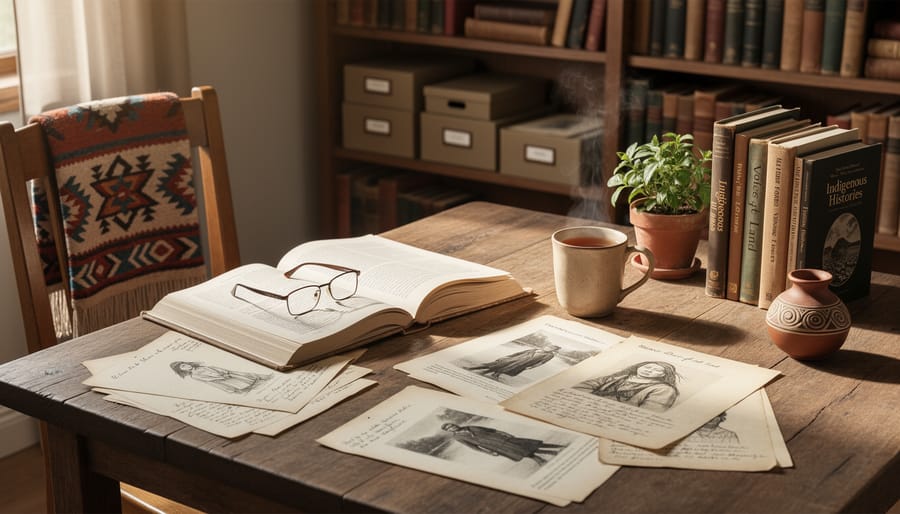
Ned Blackhawk is a Yale historian and a citizen of the Te-Moak Tribe of Western Shoshone. His book, The Rediscovery of America, is a major history of Native America written for scholars and general readers alike. It is a synthesis, meaning it gathers decades of research into one sweeping account rather than presenting a single new archival find.
The central argument is simple to state and hard to unlearn. Native history is not a side chapter in the story of the United States. It is the foundation. As one library catalog summary of the book puts it, Indians were central to the making of the continent and the nation, not bystanders to it.
That stands in sharp contrast to older narratives. For generations, textbooks framed Native peoples as vanishing, as passive, or as obstacles that history simply moved past. Blackhawk’s account refuses that frame. Native nations appear as political actors who made alliances, waged diplomacy, adapted, and resisted, even under extraordinary violence.
His own background shapes the work’s care. Writing as a Western Shoshone citizen, he carries a personal stake in getting the record right. That means historical accuracy matters, and so does avoiding the trap of treating hundreds of distinct nations as one story. Each has its own language, law, and relationship to land.
A few terms help when reading about this book:
- Indigenous-centered history
- An approach that tells the past from the viewpoint of Native peoples, treating their knowledge and decisions as central rather than peripheral.
- Settler colonialism
- A form of colonization in which newcomers come to stay and take over land, aiming to replace Indigenous societies rather than simply govern them.
- Sovereignty
- The inherent right of a Native nation to govern itself, make its own laws, and shape its own future.
- Historiography
- The study of how history has been written, including whose voices earlier historians included or left out.
Keep these terms in mind as we look at how Blackhawk builds his account, because each one shapes how the evidence is read.
How Blackhawk Builds His Account: Method, Sources, and Indigenous Voices
Centering Indigenous Agency and Memory
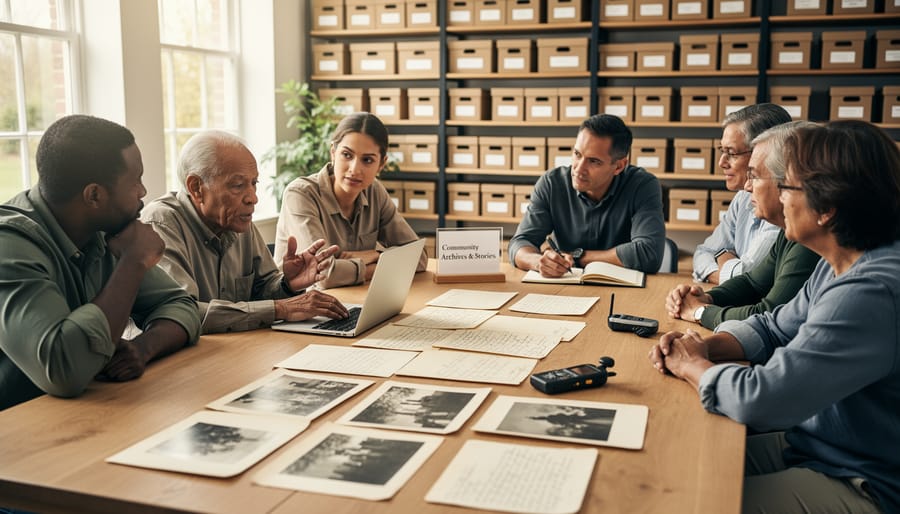
Ned Blackhawk’s account treats Native nations as political communities with their own interests, strategies, and histories, not as obstacles in someone else’s story. When a nation negotiates an alliance, resists an incursion, or withdraws to protect its people, the narrative reads these as deliberate choices made by leaders and councils who understood the stakes. This framing replaces the older image of Native peoples as passive or inevitably fading.
Written records alone cannot carry that full picture. Many archives were produced by colonial officials who recorded events from their own vantage point and often left out Native reasoning. Oral tradition and community memory fill those gaps. Families and nations have kept accounts of treaties, migrations, losses, and survival through story, song, and ceremony, often across many generations. Treating these as serious historical knowledge, rather than as mere folklore, strengthens the accuracy of the record. Other communities have shown the same pattern, as seen in the work of preserving heritage through memory despite long periods of erasure.
Using both sources together does not mean every account will match neatly. It means readers weigh each carefully, listen to community knowledge keepers, and recognize that history has always been carried in more than one form.
Reading Against the Colonial Record
Colonial records were written by people with something at stake. A treaty journal, a governor’s letter, or a mission report was meant to justify a policy, win funding, or reassure officials far away. Historians who read these documents critically ask a few plain questions. Who wrote this, and for whom? What did the author gain by describing events this way? Whose voices appear only as quoted fragments, filtered through a translator or an official’s pen?
This matters because a record’s confidence is not the same as its accuracy. An account may describe a nation as “defeated” or “friendly” when the writer was describing his own hopes. Silence matters too. When a report never mentions a nation’s own decisions, that often reflects the writer’s blind spot, not an absence of political life.
Reading against the record means setting these documents beside other evidence: oral histories, community memory, language, and the land itself. Where accounts differ, the gap is often where the real history sits.
None of this means discarding the archive. It means using it with care, and with humility about what it can and cannot tell us. That discipline lets a history honor what Native communities have long said about their own past while staying faithful to the evidence.
Major Themes and Eras in the Book
Blackhawk’s account is organized around a handful of recurring themes rather than a simple march of dates. Reading them together shows how he builds the case that Native history is the foundation of the American story, not a footnote to it.
- Indigenous continental history: the deep, varied histories of Native nations before and alongside European arrival.
- Colonial encounter: the violence, disease, and upheaval that followed contact, and the ways Native peoples met them.
- Diplomacy and political agency: alliances, treaties, and strategy as tools Native nations used to protect their interests.
- Removal and expansion: the pressures of a growing United States and the forced movement of many peoples.
- Sovereignty and renewal: the long effort to defend and rebuild Native self-government into the modern era.
The first theme reminds readers that the continent was never empty. Native nations had complex political, trade, and cultural networks long before newcomers arrived, and these shaped how every later encounter unfolded. When colonial powers did arrive, the book does not soften the devastation of warfare, enslavement, and epidemic disease. It also refuses to cast Native peoples as passive victims, showing instead how communities adapted, resisted, and reorganized.
Diplomacy runs through the narrative as a form of political skill. Native leaders negotiated, formed coalitions, and played competing powers against one another, which meant that colonial and later American expansion often depended on Native consent, or was blocked by its absence. That framing helps explain why treaties matter so much in this history.
The era of removal and expansion shows how federal policy and settler demand pushed many nations from their homelands, with consequences that differed greatly from one nation to the next. Blackhawk keeps these distinctions in view, so it is worth resisting any single story that claims to speak for every community.
The final theme carries the story into the present. Native nations did not disappear. They continued to assert their rights, rebuild institutions, and defend their futures, a struggle for sovereignty and control over land, governance, and knowledge that still shapes Native communities today.
Connecting the History to Native American Education Systems
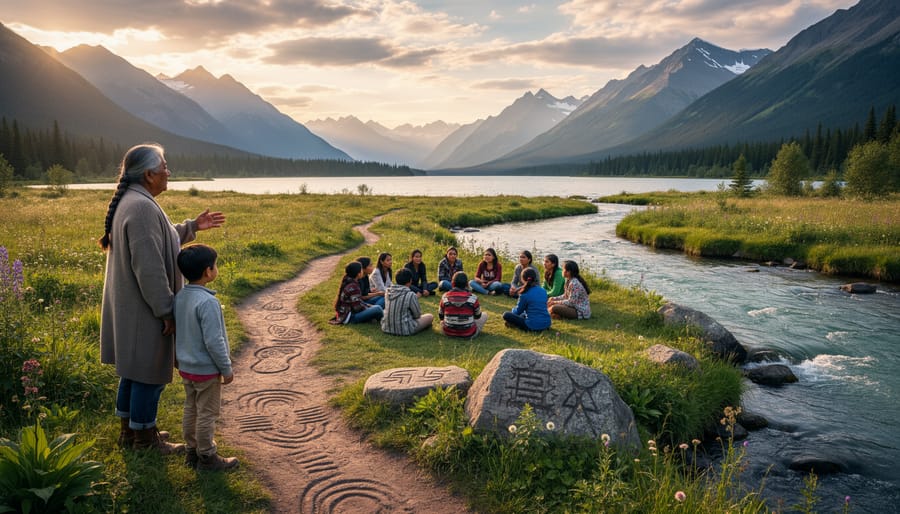
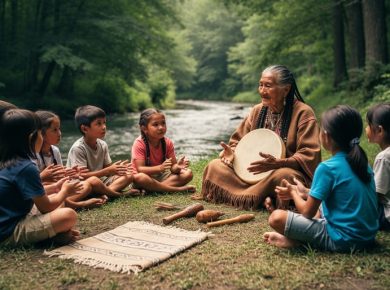
Long before any schoolhouse appeared, Native nations had education systems of their own. Children learned through family and community: grandparents passed down language and stories, aunts and uncles taught skills and responsibilities, and ceremony and the land itself served as classrooms. Knowledge was relational and place-based, tied to seasons, kinship, and obligation. The history of Native education begins here, not with the arrival of missionaries or the federal government.
Blackhawk’s account helps explain why that changed so sharply. His book shows how colonial expansion, dispossession, and federal policy reshaped Native life across centuries, and that pressure eventually reached children. Mission schools and, later, government-run boarding schools were designed as instruments of assimilation. Children were often taken far from home, cut off from their languages, their families, and their ceremonies, and punished for practicing their own ways. Many suffered neglect, abuse, illness, and death. Communities still carry that grief, and many nations are now engaged in truth-telling, documentation, and efforts to bring children home, in memory and sometimes in fact.
The story does not end with loss, though. Families resisted by hiding children, keeping languages alive at home, and finding quiet ways to teach in spite of the rules. Students themselves survived, and some turned the tools of the schools toward their own purposes. Over time, this resilience grew into Native-controlled education: tribal schools, tribal colleges, and language immersion programs rooted in community authority.
It’s worth being clear about the book’s scope. Blackhawk offers the broad political and historical context in which these schooling systems arose, but he does not provide a full study of Native education. Readers who want the details of particular schools, policies, and survivor accounts will need to turn to specialized scholarship and, above all, to the voices of the communities who lived it.
How Educators, Researchers, and Communities Use This Work
Educators often ask where to begin with a book this large, and the answer is that it works best as a starting frame rather than a final word. Blackhawk’s account gives a shared backbone, and local knowledge fills it in. A few practical ways to use it:
- Assign selected chapters as classroom readings, matched to the era or region being taught.
- Use the book to frame research questions that begin with Native political agency, not colonial outcomes.
- Host community discussion groups where elders and knowledge keepers respond to the text.
- Pair each reading with Indigenous-authored and nation-specific sources.
For curriculum designers, that last pairing matters most. A synthesis covering centuries can’t carry the full story of any one nation, so it should sit beside the histories, languages, and teachings of the people whose lands you’re studying. Invite local knowledge keepers into the process early, and treat their guidance as authoritative, not decorative.
Researchers can ground their work in Indigenous-centered scholarship by reading Blackhawk alongside Native historians and community-produced records, then noting where the archive is silent and community memory speaks. Teaching with care also means resisting the urge to talk about “Native Americans” as one people. Name the nations, and let their differences show.
The work also supports community programs. Language revitalization groups and cultural centers can draw on it for historical context, and families can see how others have kept teaching their young. If you’re building lessons, consider how Indigenous learning through games and reclaiming education through stories show Native communities teaching on their own terms, long after and alongside the schools imposed on them. That is the kind of public understanding this history can build.
How Ned Blackhawk S the Rediscovery of America Works
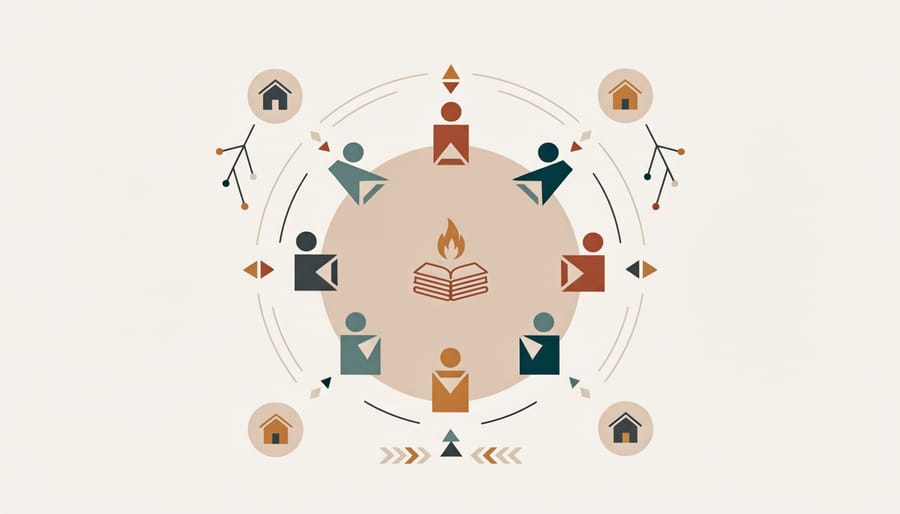
Blackhawk’s history works by changing the question before it tells the story. Instead of asking how the United States grew and then adding Native peoples where they intersect with it, the book asks how Native nations shaped the continent, and what happened when others arrived and tried to claim it.
That shift reorganizes everything. Events once presented as American triumphs, such as treaties, wars, and territorial expansion, are read as moments when Native nations made political choices under pressure. Diplomacy, alliance, trade, and resistance become visible as strategies, not footnotes.
The mechanism is cumulative. Each chapter builds on the last, so readers see how early violence and displacement set conditions for later policies, including those that targeted Native children and families. Patterns become clear across regions and centuries, and no single nation stands in for all.
For readers, the practical effect is a different habit of reading. You begin to ask whose authority is being assumed, whose voice is missing, and which communities still hold the rest of the account.
Common Questions About Blackhawk’s Work and Native History
Who is Ned Blackhawk?
Ned Blackhawk is a historian at Yale University and a citizen of the Te-Moak Tribe of Western Shoshone. His scholarship centers Native peoples in the story of North America and the United States.
Is the book about one nation or many?
Many. It surveys Indigenous peoples across centuries and regions, so no single nation’s story stands in for the rest.
Does it cover Native education directly?
Not as a full study of schooling. It supplies the wider history of colonization, policy, and resistance in which Native education unfolded, and it works best alongside sources devoted to that subject.
How should it be used alongside community knowledge?
Treat it as one voice among many. Pair it with Indigenous-authored works and the knowledge held by elders, teachers, and nations themselves.
Readers also ask who the book is for. It was written for scholars and general readers alike, which makes it a sound starting point for classrooms, study groups, and anyone beginning to learn this history.
The question at the start of this article was simple: who tells the story? For generations, Native families and nations answered it themselves, through language, ceremony, and the teaching passed from elder to child. Blackhawk’s work reminds us that those accounts were never footnotes. They are the foundation on which the continent’s history rests.
When classrooms and research begin there, education grows stronger for everyone. Students gain a more accurate past, and Native communities see their knowledge honored rather than overlooked.
So read widely, and listen closely to community voices. Support the Native-led schools and language programs that keep this teaching alive.