Showing 2 Result(s)
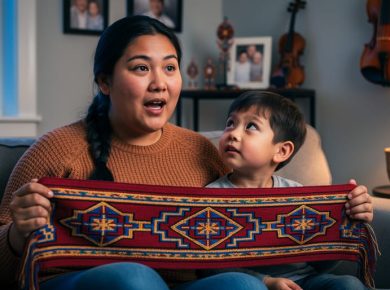
Young Métis parent and child sit on a couch holding a colorful woven sash while storytelling, lit by warm lamplight with beadwork, a fiddle, and family photos softly blurred in the background.

How Metis Parents Are Reclaiming Their Children’s Future Through Stories

Young Métis parents carry forward centuries of knowledge through the deliberate act of sharing stories with their children—a pedagogical practice that predates formal schooling systems and continues to offer profound educational benefits today. When a Métis grandmother recounts how her family survived the dispersal following the 1885 Resistance, or when a father teaches his daughter about the symbolism woven into a traditional sash, education happens through relationship, memory, and cultural continuity.
The intersection of Métis parenthood and education exists within a complex historical landscape marked by systemic disruption. Residential schools, the Sixties Scoop, and ongoing child welfare interventions have deliberately …

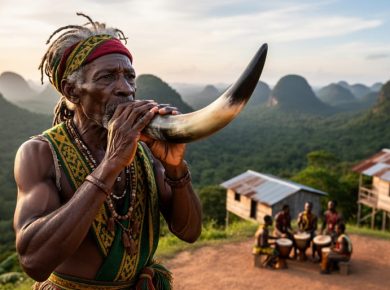
Jamaican Maroon elder in traditional attire blowing an abeng horn at golden hour on a ridge, lush green karst hills of Cockpit Country behind, with blurred wooden homes and a small drum circle in the distance

How Jamaican Maroons Preserved Their Heritage Against Centuries of Erasure

Jamaica’s cultural landscape bears witness to centuries of resistance, resilience, and remarkable cultural preservation that extends far beyond popular perceptions of reggae and beaches. Before European contact, the Taíno people cultivated sophisticated agricultural systems, governance structures, and spiritual practices across the island they called Xaymaca—”land of wood and water.” Though Spanish colonization devastated Taíno populations through disease, enslavement, and violence, their legacy persists in language, agricultural techniques, and the genetic heritage of contemporary Jamaicans who carry forward indigenous knowledge systems.
The Maroon communities represent another critical dimension of Jamaica…