Showing 3 Result(s)
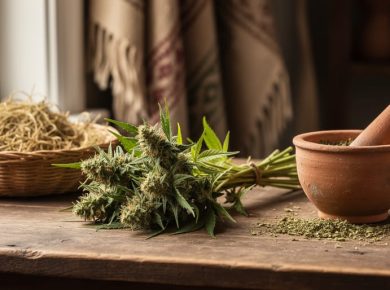
Close-up of hemp plant stems and dried flower tops arranged on a wooden table with woven baskets and a clay mortar and pestle under soft natural light.

What Is Indigenous Medicinal Hemp History (and How Was It Used)?

Indigenous medicinal hemp history encompasses thousands of years of traditional knowledge in which indigenous peoples across the Americas, Asia, and beyond cultivated and used cannabis plants for healing, ceremony, and community wellness long before Western medicine recognized their therapeutic properties. This rich legacy remains largely undocumented in mainstream historical accounts, yet oral traditions, archaeological evidence, and ethnobotanical records confirm that hemp-derived medicines formed essential components of indigenous pharmacopeias, addressing everything from pain and inflammation to spiritual ailments.
Understanding this history matters now more than ever. As contemporary society rediscovers the medicinal value of…

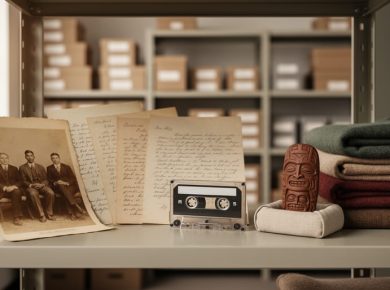
“A respectful archival display showing an old photograph, handwritten letter pages, an audio cassette, and a carved artifact on a fabric base, with the background softly blurred.”

Primary Source Media: The Foundation of Authentic Aboriginal Historical Research

Primary source media in Aboriginal contexts refers to original materials created by or directly about Indigenous peoples at the time of an event, practice, or cultural expression. These sources include oral histories recorded by community Elders, photographs taken during ceremony or daily life, handwritten letters and diaries, audio recordings of languages and songs, film footage of cultural practices, and artifacts documented in their original setting. Understanding what qualifies as a primary source in Indigenous collections requires moving beyond Western academic definitions to recognize that Aboriginal communities themselves determine what materials hold primary significance and how they should be interpreted.
The importance …

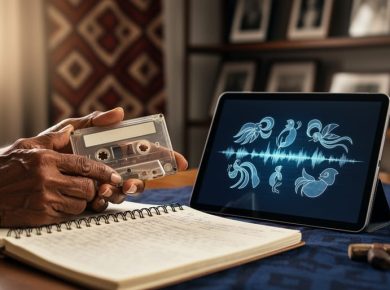
Elder’s hands holding an audio cassette and a language notebook next to a tablet with abstract visual media access, symbolizing Aboriginal media collections online.

Why Aboriginal Media Collections Online Matter More Than Ever

Media collections online provide digital access to Aboriginal cultural materials, languages, art, and historical records through platforms designed and increasingly controlled by indigenous communities themselves. These repositories represent more than digitized archives. They are active spaces of cultural reclamation, education, and sovereignty, where Elders’ voices, traditional stories, ceremonial knowledge, and linguistic resources reach both community members and outside learners under terms set by the communities who created them.
The shift to digital platforms has fundamentally changed who controls Aboriginal narratives. For generations, museums, universities, and government institutions held cultural materials …