Jamaica’s cultural landscape bears witness to centuries of resistance, resilience, and remarkable cultural preservation that extends far beyond popular perceptions of reggae and beaches. Before European contact, the Taíno people cultivated sophisticated agricultural systems, governance structures, and spiritual practices across the island they called Xaymaca—”land of wood and water.” Though Spanish colonization devastated Taíno populations through disease, enslavement, and violence, their legacy persists in language, agricultural techniques, and the genetic heritage of contemporary Jamaicans who carry forward indigenous knowledge systems.
The Maroon communities represent another critical dimension of Jamaica’s indigenous cultural development. Descended from Africans who escaped enslavement and established autonomous societies in Jamaica’s mountainous interior, the Maroons forged distinct cultural traditions that synthesize African, Taíno, and European elements into something entirely unique. Their successful resistance against British colonial forces resulted in treaties guaranteeing territorial sovereignty and cultural autonomy—rights that Maroon communities continue to exercise today. The Accompong, Moore Town, Charles Town, and Scott’s Hall communities maintain traditional governance systems, spiritual practices, and oral histories that span generations.
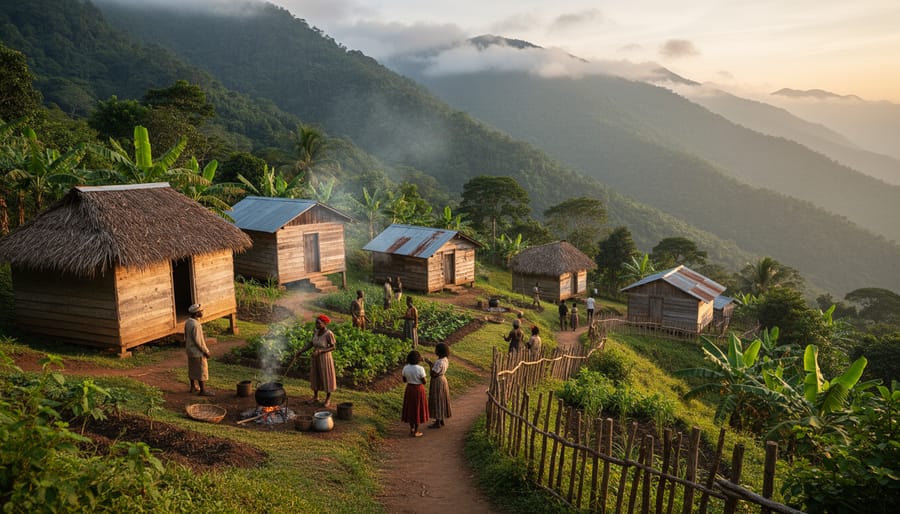
Understanding Jamaican cultural traditions requires confronting uncomfortable historical truths about colonialism while recognizing the agency and creativity of communities who refused cultural erasure. Contemporary Jamaica grapples with preserving endangered traditions as globalization, economic pressures, and limited institutional support threaten intergenerational knowledge transfer. Language revitalization efforts seek to document surviving Taíno vocabulary embedded in Jamaican Patois. Community elders work to transmit traditional ecological knowledge about medicinal plants, sustainable agriculture, and spiritual practices to younger generations facing competing cultural influences.
This examination prioritizes indigenous voices, historical accuracy, and the recognition that Jamaican cultural traditions remain living, evolving expressions of identity rather than museum artifacts. The following exploration presents these traditions with the complexity, respect, and scholarly rigor they demand.
The Indigenous Foundations: Taíno Legacy in Modern Jamaica
Surviving Words and Practices
The Taíno linguistic and cultural legacy persists in contemporary Jamaican society through vocabulary, place names, agricultural practices, and material culture, though often unrecognized in mainstream narratives. Dr. Lesley-Gail Atkinson, cultural historian at the University of the West Indies, notes that dozens of Taíno-origin words remain in daily use, including “barbecue” (barbacoa), “hammock” (hamaca), “canoe” (canoa), and “hurricane” (huracán). Food items like cassava, sweet potato (batata), and maize retain both their indigenous names and cultivation significance.
Jamaica’s topography bears witness to Taíno presence through place names. Liguanea, derived from the Taíno word for iguana, and Mammee Bay, named after the mammee apple fruit, connect contemporary Jamaicans to ancestral landscapes. Cultural geographer Marcus Williams explains that these toponyms represent more than linguistic remnants; they embody relationships between people and land that preceded colonization.
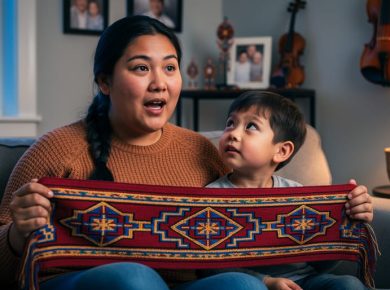
Agricultural knowledge keepers in rural communities maintain Taíno-influenced farming techniques. Elder cultivator Miss Hyacinth Gordon from Portland describes conuco gardening methods—mound cultivation systems that optimize drainage and soil fertility—as traditional practices passed through generations, though their Taíno origins often go unacknowledged. These raised-bed techniques prove particularly effective for cassava and yam cultivation in Jamaica’s varied terrain.
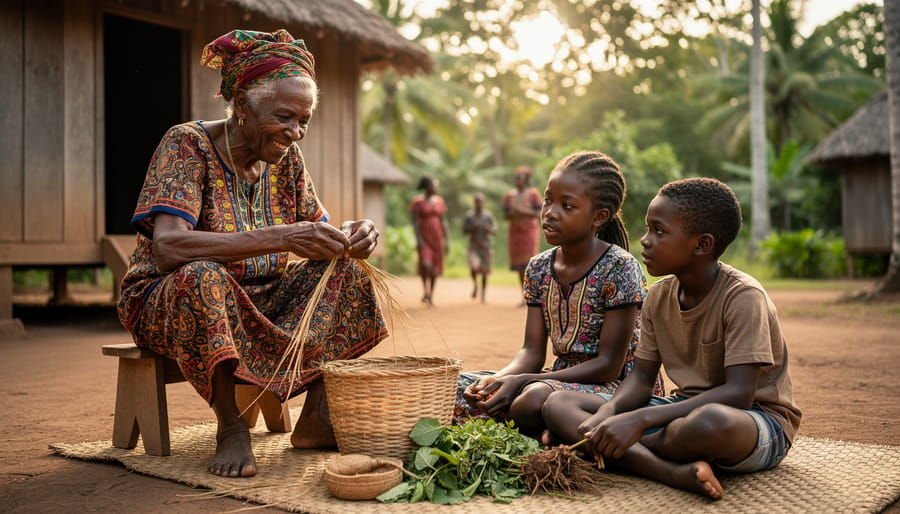
Material culture preservation occurs through continued basketry and woodworking traditions. Master craftsman Devon Thompson demonstrates techniques for weaving palm fronds and shaping wooden implements that mirror archaeological Taíno artifacts. He emphasizes that these skills, transmitted through oral tradition and apprenticeship, represent living connections to ancestral knowledge systems rather than mere historical curiosities.
Community knowledge keepers increasingly advocate for formal recognition of these Taíno-derived practices as integral components of Jamaica’s indigenous heritage, challenging colonial narratives that declare indigenous cultures extinct.
The Challenge of Cultural Continuity
The Spanish colonization of Jamaica and subsequent British occupation resulted in catastrophic population loss among the Taíno people. Disease, enslavement, and violent displacement decimated communities that had thrived on the island for centuries. By the mid-1600s, colonial records largely ceased mentioning distinct Taíno populations, leading many historians to conclude that the culture had been entirely extinguished.
This narrative of complete extinction, however, requires careful examination. Recent scholarship and community testimonies challenge the notion that Taíno people simply disappeared. Throughout the Caribbean, including Jamaica, individuals and families have maintained knowledge of Taíno ancestry, though colonial forces often compelled them to obscure this heritage for survival. The fragmentary nature of surviving cultural practices reflects not absence but the profound disruption of transmission systems that sustained knowledge across generations.
Contemporary debates surrounding Taíno descendants and cultural reclamation involve complex questions of identity, documentation, and recognition. Some scholars emphasize the lack of continuous, documented lineages, while community advocates point to oral histories, genetic evidence, and persistent cultural elements embedded within broader Jamaican society. These discussions must acknowledge both the devastating impact of colonization and the resilience of people who maintained connections to ancestral knowledge despite systemic efforts to erase them.
Understanding this challenge requires respecting ongoing efforts by Caribbean communities to reclaim and reconstruct Taíno heritage while recognizing the genuine difficulties posed by historical trauma and lost knowledge. The work of cultural continuity continues through research, community engagement, and the dignified acknowledgment of survival against overwhelming odds.
Maroon Communities: Forging Indigenous Identity Through Resistance
Kromanti Tradition and Spiritual Practices
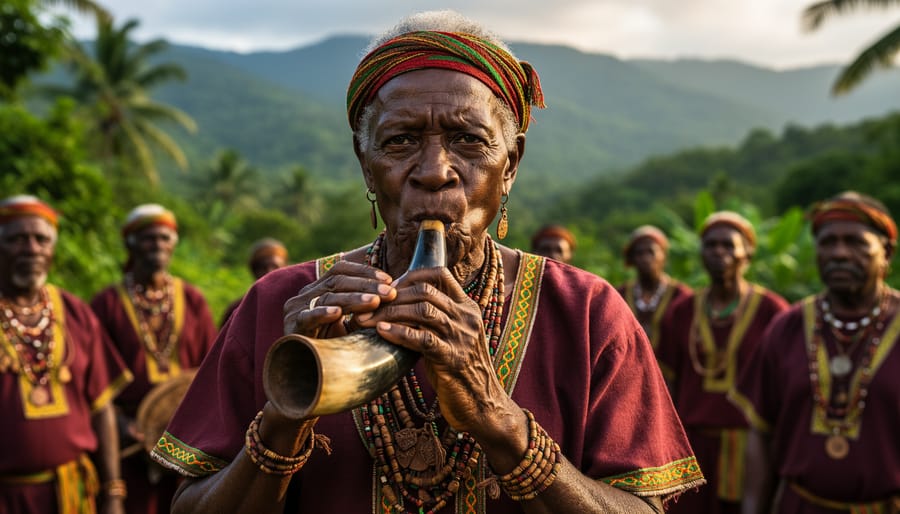
The Kromanti tradition represents one of Jamaica’s most significant African-derived spiritual systems, maintained primarily by Maroon communities who preserved these sacred practices across centuries of resistance and cultural continuity. Rooted in the spiritual traditions of the Akan and other West African peoples, Kromanti encompasses a complex framework of ancestral veneration, ritual communication, and ceremonial practice that has adapted to the Jamaican landscape while retaining its essential African character.
At the heart of Kromanti practice lies the fundamental principle of ancestral communication. Practitioners maintain that the spirits of African ancestors, particularly those who fought for freedom, remain active presences in the lives of their descendants. These ancestral spirits, known as “the old people” or “ancients,” serve as guides, protectors, and sources of wisdom. Colonel Harris of Accompong Town explains: “The ancestors never left us. They speak through the drum, through the dance, through the ceremonies we maintain. This is not history for us—it is living connection.”
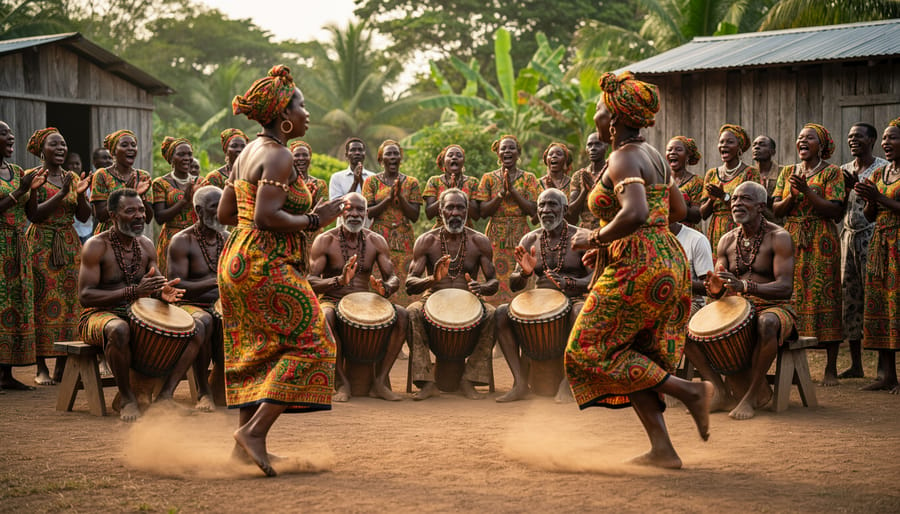
Ritual practices within the Kromanti system involve specialized knowledge passed down through designated spiritual leaders. The Kromanti Play, a ceremonial gathering, incorporates drumming patterns, songs in ritual language combining African and Jamaican elements, and spirit possession through which ancestors communicate directly with the community. These ceremonies typically occur at sacred sites, often locations with historical significance to Maroon resistance, where the boundary between physical and spiritual realms becomes permeable.
The preservation of Kromanti traditions requires careful attention to ritual protocols and the training of new practitioners. Elder practitioners emphasize that maintaining these ceremonies represents both spiritual obligation and cultural resistance. As one Maroon elder notes: “When we keep these traditions, we honor those who fought so we could be free. We show that colonialism did not break what our ancestors built.”
Contemporary challenges to Kromanti preservation include external pressures from dominant religious frameworks and the complexities of transmitting esoteric knowledge in changing social contexts. Yet Maroon communities continue adapting these practices while maintaining their spiritual integrity, demonstrating the dynamic nature of cultural preservation.
Language Preservation: Kromanti and Maroon Creoles
The Maroon communities of Jamaica developed distinctive linguistic systems that served both practical and cultural purposes, establishing communication methods that reinforced their autonomy and preserved African cultural continuity. Kromanti, the sacred ritual language of the Windward Maroons, represents one of the most significant linguistic achievements of resistance communities in the Americas. This ceremonial language, rooted in Akan and other West African linguistic traditions, functions primarily within spiritual contexts, particularly during ancestral ceremonies and healing rituals.
Community elders maintain that Kromanti carries knowledge that cannot be adequately translated into English or Jamaican Patois, embodying concepts and spiritual understandings specific to Maroon cosmology. As one Moore Town elder explains, “The language holds the power of our ancestors. When we speak Kromanti, we are not just using words—we are calling upon generations of knowledge and protection.”
Beyond Kromanti, Maroon communities developed distinct Creole varieties that incorporated African grammatical structures, English vocabulary, and indigenous influences. These everyday languages enabled secure communication while establishing linguistic markers of Maroon identity. The Leeward Maroons of Accompong and the Windward Maroons each developed subtle linguistic variations reflecting their specific histories and geographic isolation.
Contemporary language preservation efforts face significant challenges as younger generations increasingly adopt standard English and Jamaican Patois. Community-led initiatives now document these languages through oral history projects, language classes, and digital archives. Maroon cultural practitioners emphasize that language preservation extends beyond vocabulary retention—it safeguards intergenerational knowledge transfer systems essential for maintaining ceremonial practices, traditional medicine, and historical narratives that define Maroon cultural identity.
Traditional Governance and Social Organization
The Colonel System and Community Authority
Among Jamaica’s Maroon communities, the Colonel system represents a sophisticated governance structure that has preserved cultural autonomy for over three centuries. This hereditary and elected leadership framework demonstrates how indigenous resistance movements developed institutional mechanisms to maintain sovereignty and cultural continuity.
The position of Colonel, traditionally held within specific family lineages, carries responsibilities extending far beyond administrative oversight. As Colonel Frank Lumsden of Charles Town explains, “The Colonel is the keeper of traditions, the mediator of disputes, and the guardian of ancestral lands. This role connects our present community to the treaties our ancestors signed with the British crown.” The Colonel’s authority encompasses land management, cultural preservation, conflict resolution, and representation in negotiations with governmental bodies.
Leadership selection varies between Maroon communities. Some maintain strict hereditary succession through matrilineal or patrilineal lines, while others incorporate community election processes that balance tradition with contemporary democratic principles. This flexibility demonstrates the adaptive nature of Maroon governance while preserving core cultural values.
The Colonel system proved instrumental in protecting communal land rights established through eighteenth-century peace treaties. These leaders maintain oral and documentary records of land boundaries, resource allocation, and historical agreements. Community councils, working alongside the Colonel, ensure collective decision-making on matters affecting cultural practices, land use, and external relationships.
This governance structure exemplifies how traditional authority systems can coexist with modern state apparatus while maintaining distinct cultural identity. The Colonel system continues safeguarding Maroon autonomy, ensuring younger generations inherit both land rights and cultural knowledge necessary for community survival.
Land Rights and Territorial Sovereignty
The struggle to maintain territorial sovereignty remains central to both Maroon and Taíno descendant communities in Jamaica, as control over ancestral lands directly enables cultural preservation and self-determination. Historical treaties, particularly the 1739 and 1740 peace agreements with Maroon communities, explicitly guaranteed territorial autonomy and land rights that many community members argue have been systematically eroded through colonial and post-colonial policies.
Moore Town elder Colonel Sterling recalls, “Our ancestors fought and died for this land so we could live free and maintain our ways. When the land is threatened, everything about who we are is threatened.” This connection between territory and cultural survival reflects a broader indigenous understanding that land stewardship encompasses not merely property ownership but the preservation of sacred sites, traditional ecological knowledge, and community governance systems.
Contemporary challenges include encroachment from development projects, unclear legal frameworks regarding treaty obligations, and disputes over resource extraction on traditional territories. Many Maroon communities maintain that successive governments have failed to honor treaty commitments, leaving their territorial rights vulnerable despite constitutional protections for indigenous peoples.
The relationship between land control and cultural continuity extends to agricultural practices, medicinal plant cultivation, and ceremonial spaces. Community leaders emphasize that without secure territorial sovereignty, transmission of traditional knowledge to younger generations becomes increasingly difficult. Recent organizing efforts have focused on legal recognition, documentation of traditional boundaries, and coalition-building with international indigenous rights movements to strengthen protections for treaty-guaranteed lands and ensure cultural traditions can flourish in their ancestral contexts.
Living Traditions: Music, Dance, and Oral History
The Abeng and Ceremonial Music
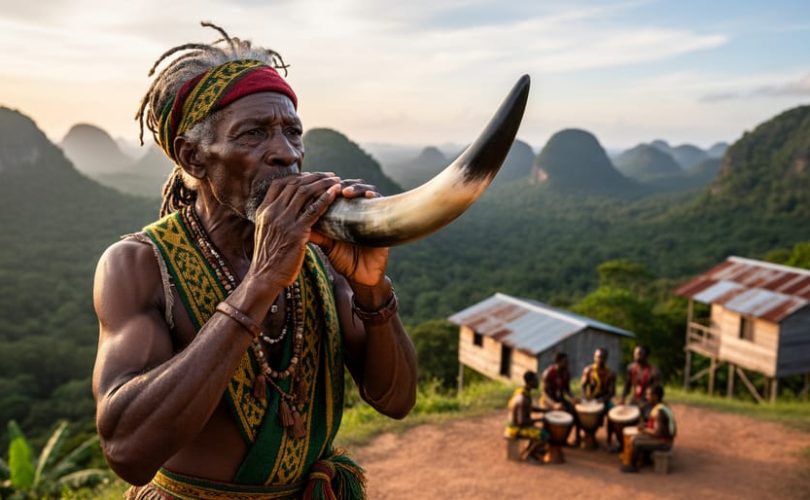
The abeng, a hollowed cow horn transformed into a powerful wind instrument, served as vital communication technology for Jamaica’s Maroon communities during their resistance against colonial enslavement and continues to hold profound ceremonial significance today. As Colonel C.L.G. Harris, a Maroon elder and cultural keeper, explains, “The abeng was our telephone, our alarm system, our way of speaking across mountains when words couldn’t travel.” During the eighteenth-century Maroon Wars, skilled abeng players developed sophisticated coded messages that could transmit warnings of military movements,召召召召召召召召召召召召召召召召召召召召召召召召召召召 召 召召召召召 call communities to assembly, and coordinate resistance strategies across vast territories, with different rhythms and pitch patterns conveying specific meanings understood only by community members.
The instrument’s sound could carry for miles through Jamaica’s mountainous terrain, making it indispensable for communities maintaining autonomy in remote settlements. Accompanying the abeng, various drums including the gumbeh and the accompanying drum formed the rhythmic foundation of Maroon ceremonial life, particularly during Kromanti ceremonies that honor ancestral spirits and maintain spiritual connections to African heritage. These drums, constructed using traditional methods passed down through generations, create complex polyrhythmic patterns that facilitate spiritual communication and community cohesion.
Contemporary Maroon communities, particularly in Accompong, Moore Town, and Charles Town, continue to incorporate the abeng and traditional drums into annual celebrations and ceremonies. During Accompong’s annual January celebration commemorating the 1739 peace treaty, the abeng announces proceedings and honors ancestors who secured Maroon sovereignty. Cultural practitioners emphasize that these instruments represent more than historical artifacts; they embody ongoing cultural identity, resistance heritage, and community self-determination, connecting present generations to ancestral wisdom and collective memory.
Storytelling and Historical Memory
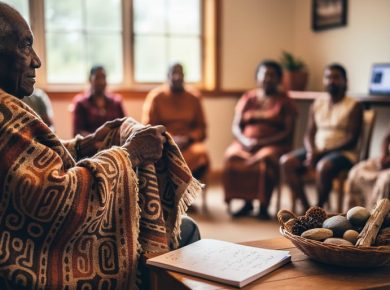
Within Jamaican indigenous communities, storytelling serves as the primary vessel for preserving historical memory and transmitting cultural knowledge across generations. This oral tradition functions not merely as entertainment, but as a sophisticated system of education, cultural continuity, and collective identity formation. Among Maroon communities, elders hold the honored position of community historians, entrusted with maintaining accurate narratives of resistance, survival, and cultural persistence that written records often overlooked or deliberately erased.
The Maroon oral tradition preserves detailed accounts of the first battles for freedom, the strategic brilliance of leaders like Nanny and Cudjoe, and the intricate knowledge of medicinal plants and survival techniques that enabled communities to thrive in Jamaica’s interior mountains. These narratives are shared during community gatherings, commemorative ceremonies, and through deliberate mentorship of younger generations. Elder storytellers employ specific narrative techniques, including call-and-response patterns, proverbs, and rhythmic cadences that aid memory retention and ensure accurate transmission of essential historical information.
Community historians emphasize that their oral accounts often contradict or complicate colonial written records, offering perspectives that center indigenous agency and experience. These storytellers maintain genealogies, settlement histories, and accounts of treaty negotiations that establish land rights and cultural sovereignty. The preservation of these narratives has proven particularly crucial in contemporary land rights disputes and cultural recognition efforts.
Contemporary Maroon communities increasingly combine oral traditions with digital documentation, creating archives that respect traditional knowledge-sharing protocols while ensuring preservation for future generations. This approach honors elder authority while adapting to modern contexts, demonstrating how storytelling traditions remain dynamic rather than static. Young community members are actively learning these narrative traditions, ensuring that historical memory continues to shape collective identity and inform ongoing struggles for recognition and justice.
Contemporary Challenges to Cultural Preservation
Balancing Tourism and Authenticity
The growth of heritage tourism in Jamaica presents complex opportunities and challenges for Maroon communities and descendants of the Taíno people. While tourism generates economic benefits and raises global awareness of indigenous cultural persistence, it also risks commodifying sacred traditions and reducing living cultures to performative displays for external audiences.
Maroon communities in Moore Town and Accompong face ongoing tensions between sharing their heritage and maintaining cultural integrity. Colonel Wallace Sterling of Moore Town Maroons explains: “We welcome those who come to learn with respect, but our ceremonies and sacred sites are not entertainment. Some aspects of our culture must remain protected within the community.” This careful navigation reflects broader concerns about who controls cultural narratives and how indigenous knowledge is represented to outsiders.
The challenge intensifies when tour operators, often lacking deep cultural understanding or community consultation, create simplified or inaccurate portrayals of Jamaican indigenous heritage. These misrepresentations can perpetuate stereotypes and erase the complexity of cultural survival and adaptation. Community elders emphasize that authentic cultural tourism must be community-led, with indigenous voices determining what is shared, how stories are told, and how benefits are distributed.
Successful models exist where communities maintain control. Some Maroon settlements have developed cultural centers and guided experiences managed entirely by community members, ensuring accurate representation while generating local income. These initiatives demonstrate that tourism and authenticity can coexist when indigenous peoples retain authority over their cultural narratives and sacred knowledge remains protected from commercial exploitation.
Intergenerational Knowledge Transfer in the Modern Era
The transmission of traditional knowledge faces unprecedented challenges in contemporary Jamaica, where Maroon and Taíno-descended communities navigate the complex terrain between cultural preservation and modern economic demands. Elder knowledge-holders in Maroon communities express concern that formal education systems, while providing valuable opportunities, often fail to incorporate indigenous histories and traditional practices into curricula. As Maroon elder Colonel Frank Lumsden observes, “Our young people learn about European history in school, but they don’t learn the strategies our ancestors used to maintain freedom for centuries.”
Economic pressures compound these educational gaps. Young people increasingly migrate to urban centers seeking employment, creating physical and cultural distance from community elders who hold specialized knowledge of traditional medicine, agricultural practices, and ceremonial protocols. The shift from subsistence farming to wage labor economies has diminished opportunities for the organic transfer of environmental knowledge that once occurred through daily practice.
However, communities demonstrate remarkable adaptability in response to these challenges. Some Maroon settlements have established cultural centers where elders conduct workshops in traditional drumming, Kromanti language, and herbal medicine preparation. Digital technology, initially perceived as a threat to traditional knowledge systems, now serves preservation efforts through community-led documentation projects. Youth-elder partnerships are creating archives of oral histories, ensuring that ancestral wisdom remains accessible to future generations while respecting protocols around sacred knowledge that should remain within community contexts.
Revitalization Efforts and Future Directions
Community-Based Documentation and Research
Across Jamaica, communities are reclaiming authority over how their cultural knowledge is documented, preserved, and shared. This shift toward community-controlled documentation represents a fundamental departure from earlier anthropological approaches where outside researchers extracted knowledge without meaningful collaboration or benefit to local populations.
In several Maroon communities, oral history initiatives have established protocols ensuring elders control what stories are recorded and how they may be used. The Moore Town Maroon Heritage Foundation, for instance, maintains archives of oral histories recorded by community members themselves, preserving accounts of resistance, traditional governance, and cultural practices in the voices of those who live these traditions. These recordings serve both as educational resources for younger generations and as primary sources that challenge colonial historical narratives.
Language preservation programs have emerged as particularly vital projects. Efforts to document Maroon Kromanti language and ritual practices occur under strict community oversight, with elders determining what knowledge can be publicly shared versus what remains protected within ceremonial contexts. This approach honors the sacred dimensions of cultural knowledge while still creating resources for language transmission.
Collaborative research models have also evolved, where outside scholars work alongside community researchers as respectful partners rather than extractive authorities. These partnerships require extensive consultation, community approval of research questions and methodologies, and shared ownership of resulting publications. Such collaborations have produced important documentation of traditional ecological knowledge, medicinal practices, and cultural histories that center indigenous perspectives and analytical frameworks. The principle remains clear: communities themselves are the primary authorities on their own cultural heritage, with documentation serving community-defined goals rather than purely academic interests.
Youth Engagement and Cultural Education
Jamaican communities maintain cultural continuity through dedicated youth engagement programs that connect younger generations with ancestral knowledge and traditional practices. These initiatives, often led by community elders and cultural practitioners, create vital spaces where young people learn traditional skills, languages, and worldviews that might otherwise be lost.
Maroon communities have developed comprehensive apprenticeship systems where youth participate in traditional activities such as drumming, agricultural practices using inherited techniques, and the preparation of customary foods. Elder Maroon leader Colonel Frank Lumsden emphasizes that these programs go beyond skill transmission, stating they instill pride, identity, and a sense of responsibility to ancestors and future generations. Young people learn oral histories directly from knowledge keepers, ensuring stories remain authentic and contextualized within community values.
Cultural education programs also address leadership development, preparing youth to advocate for their communities while navigating contemporary challenges. Participants engage with both traditional governance structures and modern organizational frameworks, equipping them to protect land rights, advance cultural preservation initiatives, and challenge misrepresentation in broader Jamaican society.
These efforts face obstacles including limited funding, geographic dispersal of community members, and competing pressures from mainstream education and economic systems. However, communities persist in adapting traditional teaching methods to contemporary contexts, incorporating digital tools for documentation while maintaining the primacy of face-to-face transmission. Success depends on recognizing youth not merely as cultural inheritors but as active participants whose innovation and interpretation ensure traditions remain living, dynamic practices rather than museum artifacts.
The resilience of Jamaican cultural traditions stands as a testament to the enduring strength of indigenous heritage in the face of historical trauma and ongoing pressures of globalization. From the surviving Taíno influences woven into Jamaica’s linguistic, agricultural, and spiritual fabric to the vibrant Maroon communities that preserve centuries-old practices of governance, healing, and resistance, these traditions represent far more than historical artifacts worthy of museum display. They are living, breathing systems of knowledge that continue to guide communities, inform identities, and offer wisdom relevant to contemporary challenges.
Understanding Jamaican indigenous cultural heritage requires recognizing that preservation is not a passive act of maintaining static customs, but rather an active, dynamic process of adaptation and renewal. Community elders, cultural practitioners, and youth activists engage daily in the work of sustaining traditions while simultaneously responding to modern contexts. This ongoing cultural evolution honors ancestral wisdom while acknowledging that living cultures must breathe, grow, and respond to changing circumstances. The descendants of both Taíno peoples and Maroon communities demonstrate that cultural preservation means empowering communities to determine their own narratives, maintain sovereignty over their knowledge systems, and continue practices in ways that serve contemporary needs.
Supporting these preservation efforts demands more than academic interest or tourism revenue. It requires concrete commitments to community-led initiatives, respect for indigenous knowledge as legitimate and valuable, and recognition that these communities are authorities on their own traditions. Researchers, educators, and institutions must approach Jamaican cultural heritage with humility, centering indigenous voices in all documentation and interpretation efforts. The future of these traditions depends not on external preservation but on ensuring communities have the resources, autonomy, and recognition necessary to sustain their heritage on their own terms, for generations to come.