
Indigenous data sovereignty is the right of Indigenous peoples to govern the collection, ownership, and application of data about their communities, territories, cultures, and resources. It asserts that Indigenous nations possess inherent authority over information systems that affect them, challenging centuries of extractive research practices where outside institutions controlled how Indigenous knowledge and statistics were gathered, interpreted, and used.
This concept matters because data shapes policy, funding allocations, health interventions, and land management decisions that directly impact Indigenous lives. When external entities control this information, they often perpetuate colonial frameworks that misrepresent community realities or prioritize institutional interests over Indigenous wellbeing. A 2024 study found that fewer than 15 percent of health datasets concerning Indigenous populations in North America were governed by the communities they described, leaving critical decisions about disease prevention, mental health programming, and cultural safety in the hands of outsiders.
Data sovereignty reclaims this power. It positions Indigenous communities as architects of their own information ecosystems, determining what gets measured, who can access it, and how findings are applied. The movement gained momentum through frameworks like OCAP (Ownership, Control, Access, and Possession), developed by the First Nations Information Governance Centre in Canada, which establishes clear protocols for ethical data stewardship. Similar principles have emerged globally, from Australian Aboriginal and Torres Strait Islander data governance networks to Māori data sovereignty initiatives in Aotearoa New Zealand.
Elder Margaret Noodin, Anishinaabe language keeper and scholar, describes the stakes plainly: “When others define what counts as knowledge about us, they define what counts as truth. Data sovereignty means our stories, our numbers, our evidence speak with our voices.”
This article explains how indigenous data sovereignty operates in practice, breaking down its core components, examining real-world applications across health care, environmental monitoring, and cultural preservation, and offering guidance for researchers and institutions committed to ethical collaboration.
What Indigenous Data Sovereignty Means
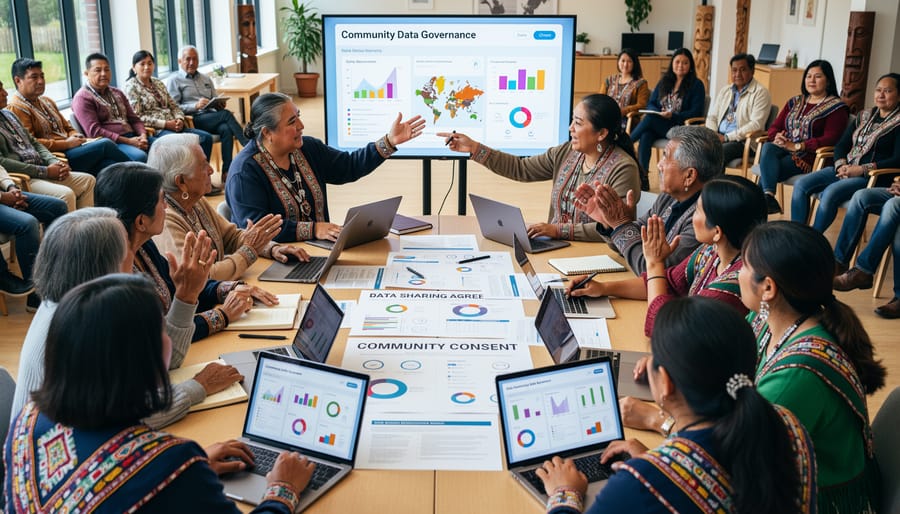
Indigenous data sovereignty is the right of indigenous peoples to govern collection, ownership, application of data about their communities, lands, resources, and citizens. It means that Aboriginal peoples control what information is gathered, who can access it, how it gets used, and what happens to it over time. This isn’t just about protecting privacy. It’s about reclaiming authority over knowledge systems that have been extracted, interpreted, and published by outsiders for generations, often without consent or benefit to the communities being studied.
At its core, indigenous data sovereignty is both a practice and a principle. As a practice, it involves establishing governance structures, protocols, and agreements that give communities decision-making power over research projects, administrative datasets, health records, and cultural documentation. As a principle, it’s rooted in the broader concept of self-determination: the inherent right of indigenous peoples to make decisions about their own futures, including how their information shapes policy, resources, and public understanding.
- Data sovereignty
- The authority to control data throughout its lifecycle, from collection and storage to analysis and sharing, based on the laws and values of the data’s rightful owners.
- Indigenous data
- Information about Aboriginal peoples, their territories, resources, knowledge systems, and cultural practices, regardless of who currently holds or manages that data.
- Governance
- The systems, protocols, and decision-making structures that determine how data is collected, used, protected, and shared within and beyond a community.
- Self-determination
- The fundamental right of indigenous peoples to freely determine their political status, pursue their own development, and make decisions about matters affecting their communities.
Indigenous data sovereignty differs sharply from conventional data governance. Standard frameworks typically prioritize individual consent, institutional ethics review, and legal compliance with privacy laws. These are important, but they don’t address collective rights or cultural protocols. When a university researcher publishes findings about an Aboriginal community, individual participants may have signed consent forms, but the community as a whole had no say in the research questions, methods, interpretation, or how results get used. Indigenous data sovereignty flips this dynamic. It recognizes communities, not just individuals, as rights-holders who must be partners in any process involving their information.
This approach also challenges the assumption that data becomes “public knowledge” once collected. For many Aboriginal communities, certain information carries cultural restrictions, seasonal protocols, or gender-specific access rules that standard open-data policies ignore. Indigenous data sovereignty asserts that these cultural laws matter and must shape how information moves through the world.
How Indigenous Data Sovereignty Works in Practice
The OCAP® Framework

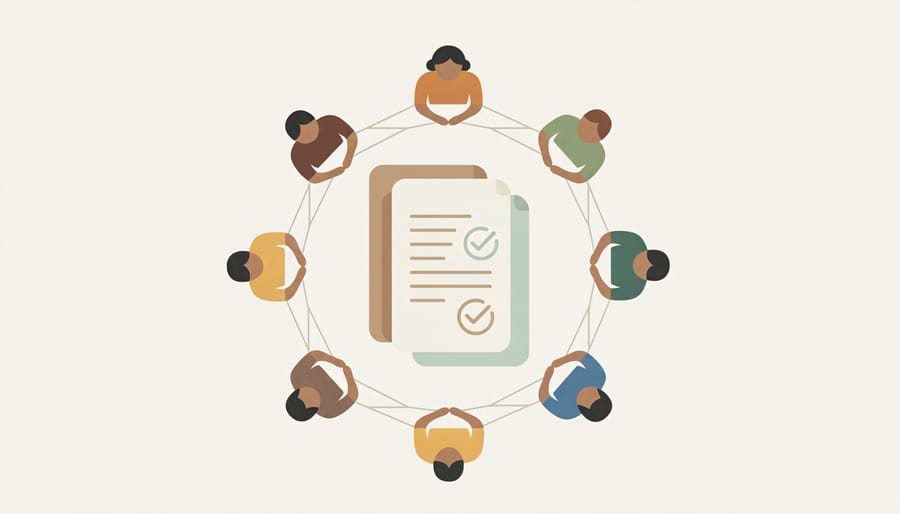
OCAP® developed by FNIGC (the First Nations Information Governance Centre) establishes clear protocols for how research and information initiatives should operate with First Nations communities in Canada. Rather than treating data as public property available to any researcher, OCAP® asserts that First Nations have rights and interests in information that comes from their communities, their territories, and their members.
The framework rests on four interconnected principles that shift power from external institutions to communities:
- Ownership: The community collectively owns information about its members, not the individual researcher or institution that collected it, for example, health survey data belongs to the First Nation, even when gathered by university researchers.
- Control: First Nations govern all stages of research and information management, from deciding whether a project proceeds to determining how findings are interpreted and shared, a community can refuse publication of results that misrepresent their experiences.
- Access: First Nations determine who can see and use their data, under what conditions, and for what purposes, sensitive ceremonial knowledge or family genealogies might be restricted to community members only.
- Possession: Physical control of data remains with the First Nation or their designated stewards, meaning files, databases, and research materials are housed within community-controlled systems rather than solely on university servers.
These principles work together as a system of data stewardship where communities exercise authority at every point. When a health organization wants to survey a First Nation about diabetes prevalence, OCAP® requires they first seek community approval for the project design, ensure the nation retains ownership of responses, store data copies in community systems, get consent before publishing, and return findings in formats the community finds useful for their own health planning.
The framework doesn’t stop research. It establishes the terms for ethical research partnerships where First Nations are decision-makers rather than subjects, where knowledge benefits the community that created it, and where centuries of extractive research practices give way to relationships built on respect and reciprocity.
Other Indigenous Data Governance Models
While OCAP® provides a comprehensive framework for First Nations communities in Canada, indigenous peoples worldwide have developed similar governance models that reflect their distinct cultural values and legal contexts.
In Aotearoa New Zealand, Māori communities assert data sovereignty through the principle of rangatiratanga (authority and self-determination) over Māori data. This framework recognizes taonga (treasured) data as encompassing not just statistics about Māori populations, but also genealogical records, traditional ecological knowledge, and cultural heritage information. Māori data sovereignty emphasizes that Māori must define what constitutes Māori data, determine how it is collected and used, and ensure benefits flow back to iwi (tribes) and hapū (sub-tribes). The Te Mana Raraunga network has advanced this work through developing practical guidelines for researchers and government agencies.
Australian Aboriginal and Torres Strait Islander communities have established protocols that center on Free, Prior and Informed Consent principles adapted to indigenous contexts. These protocols emphasize community consultation before research begins, transparent communication throughout data collection, and shared ownership of research outcomes. Several Aboriginal-controlled health organizations and land councils have implemented data governance policies that require researchers to negotiate data agreements directly with community representatives.
The global framework of CARE Principles bridges these regional approaches. CARE stands for Collective Benefit, Authority to Control, Responsibility, and Ethics. Developed by indigenous researchers and data professionals from multiple countries, these principles complement existing research ethics frameworks by explicitly centering indigenous rights and interests. Unlike OCAP®, which was designed specifically for First Nations, CARE provides adaptable guidance that indigenous communities worldwide can apply alongside their own culturally-specific protocols.
These varied frameworks share common commitments: indigenous communities hold inherent rights to govern data about their peoples, cultures, and territories, regardless of who conducts the research.
Components of Indigenous Data Sovereignty
Indigenous data sovereignty functions as an ecosystem rather than a single policy or protocol. Several interconnected components work together to establish and maintain community authority over data.
Legal and Policy Frameworks
The foundation begins with legal recognition of indigenous rights to data. This includes band council resolutions, tribal data governance policies, research ethics protocols, and formal agreements with universities, governments, and health authorities. Some communities have enacted data sovereignty codes that specify ownership structures, consent requirements, and penalties for misuse. These legal instruments create enforceable boundaries around who can collect data, under what conditions, and how information must be managed.
At a broader level, advocacy for legislative change seeks to embed indigenous data rights in privacy laws, research ethics regulations, and freedom of information statutes. Canada’s First Nations Information Governance Centre, for example, has worked to ensure OCAP® principles are recognized in federal data strategies and research funding requirements.
Cultural Protocols and Knowledge Systems
Indigenous data sovereignty necessarily incorporates traditional laws, cultural protocols, and indigenous knowledge systems that govern information sharing. These protocols determine what can be recorded, who has authority to share specific knowledge, seasonal or ceremonial restrictions on data access, and the proper handling of sensitive material.
Elders and knowledge keepers often guide decisions about cultural data, applying protocols passed down through generations. A community might restrict access to certain language recordings to clan members, require that primary source media containing ceremonial content be stored on-reserve rather than in external archives, or mandate that oral histories be shared only with community approval. These protocols reflect each nation’s distinct governance traditions and relationship to knowledge.
Technical Infrastructure and Data Management Systems
Sovereignty requires the practical capacity to store, secure, and analyze data. This means investing in secure servers, databases, geographic information systems, and data management software under community control. Some nations have built data centres within their territories. Others use cloud storage with encryption and agreements that specify data residency within indigenous-controlled systems.
Technical infrastructure also includes trained staff who can manage databases, run statistical analyses, and produce reports that serve community priorities. Without this capacity, communities remain dependent on external institutions to interpret their own information.
Capacity Building and Training
Building a skilled workforce represents a crucial component. Communities invest in training data stewards, research coordinators, statisticians, and information technology specialists from within their membership. Educational programs range from certificate courses in data management to university partnerships that support indigenous students in data science, epidemiology, and research methods.
Capacity building extends beyond technical skills to include understanding research ethics, negotiating data sharing agreements, and teaching community members about their data rights. When community members understand data sovereignty principles, they can make informed decisions about participation in research and assert control over their information.
These components reinforce each other. Legal frameworks mean little without technical capacity to exercise control. Cultural protocols need infrastructure that can accommodate them. Together, they create the conditions for genuine self-determination in the information age.
Why Indigenous Data Sovereignty Matters
For over a century, researchers extracted knowledge from indigenous communities without permission, consent, or meaningful benefit. University scholars, government agencies, and medical institutions collected blood samples, recorded sacred ceremonies, documented languages, and gathered genealogical information, then carried this data away. Communities rarely saw results. Findings appeared in academic journals behind paywalls, informed policies made without indigenous input, and sometimes caused direct harm when sensitive cultural knowledge was published or misused.
This extractive approach treated indigenous peoples as subjects rather than partners. Researchers defined questions, owned the data, controlled access, and decided how to interpret findings. The pattern mirrored colonial relationships: outsiders determined what was valuable, took what they wanted, and left communities with little recourse when research caused damage or produced no tangible benefits.
The consequences were real. Medical studies pathologized indigenous health without addressing social determinants. Genetic research raised ethical concerns about ownership of biological materials. Archaeological work disturbed sacred sites. Educational assessments framed indigenous knowledge systems as deficient rather than different. Each instance reinforced the message that indigenous peoples lacked authority over information about their own lives, territories, and traditions.
Indigenous data sovereignty directly challenges this legacy. By asserting the right to govern data collection, ownership, and use, communities reclaim authority that colonial structures denied them. This shift enables Aboriginal peoples to set research priorities based on community needs rather than academic curiosity. Projects now address pressing concerns: improving maternal health outcomes, revitalizing endangered languages, documenting traditional ecological knowledge, and informing self-governance decisions.
The approach transforms research relationships. When communities control community healing data they determine which projects proceed, how participants are recruited, what questions get asked, and how results are shared. Data sovereignty ensures that sensitive information, from media collections online to health records, remains protected according to cultural protocols while still serving community purposes.
This matters because data shapes policy. Governments allocate resources based on statistics. Education systems develop curricula using research findings. Health programs rely on epidemiological data. When indigenous peoples lack control over this information, decisions affecting their communities get made using incomplete, inaccurate, or culturally inappropriate data. Sovereignty ensures that the evidence base reflects community realities and supports self-determined priorities rather than perpetuating colonial narratives.
How Indigenous Data Sovereignty Is Applied
In Health Research and Services
Aboriginal communities are using data sovereignty principles to transform health research and service delivery, ensuring that health information serves community priorities rather than external agendas. Under data sovereignty frameworks, communities decide what health data gets collected, who can access it, and how findings are applied to improve wellness outcomes.
The Maiam nayri Wingara Aboriginal and Torres Strait Islander Data Sovereignty Collective in Australia has worked with health services to develop protocols ensuring that Aboriginal health data supports community-controlled health organizations rather than simply feeding institutional databases. These protocols require that research questions emerge from community needs and that results return in accessible formats that inform local health planning.
In Canada, First Nations communities have established regional health information systems governed by OCAP® principles. The First Nations Information Governance Centre manages the First Nations Regional Health Survey, a national health assessment controlled entirely by First Nations from design through data collection to analysis. Communities own the data, control how it’s used, and receive customized reports addressing their specific health priorities.
Data sovereignty also addresses historical harms. Indigenous communities have been over-researched with minimal benefit, their health information extracted to document disparities without meaningful action. By asserting control, communities now require research partnerships that include capacity-building, employment of community researchers, and commitments to implement findings. This shift means health data becomes a tool for community empowerment rather than surveillance, supporting culturally safe care models and Indigenous-led health initiatives that reflect community knowledge and values.
In Language and Cultural Preservation

Language recordings, oral histories, and cultural knowledge represent some of the most sensitive data indigenous communities hold. When elders share stories, when language speakers record pronunciations, or when knowledge-keepers document traditional practices, they’re creating data that carries cultural protocols about who can access it, when, and for what purposes.
Data sovereignty principles ensure these recordings remain under community control rather than sitting in university archives where researchers can access them freely. Many Aboriginal communities now maintain their own digital repositories with tiered access systems: some materials available to all community members, others restricted to specific family groups, and ceremonial knowledge accessible only to authorized knowledge-holders.
The protocols matter intensely here. A recording of sacred songs isn’t just audio data, it’s ceremony, governed by cultural law about transmission and use. Communities decide whether materials can be shared outside, translated, or even preserved at all. Some knowledge is meant to fade when its keeper passes; digital preservation isn’t always appropriate.
Language revitalization projects demonstrate sovereignty in practice. Communities determine which dialect becomes standard, how orthography is developed, and whether teaching materials can be distributed publicly. They control the intellectual property in curriculum resources and decide if language apps respect cultural contexts or simply extract vocabulary.
In Community Planning and Governance
Indigenous data sovereignty transforms how communities collect, manage, and use information to guide their own development. Aboriginal communities increasingly design their own surveys and census processes rather than relying solely on government statistics that may not capture community priorities or cultural categories. This allows them to ask questions that matter locally, about traditional language use, connection to Country, participation in cultural practices, or housing adequacy measured by community standards.
In land use planning, data sovereignty means communities control spatial data, environmental monitoring information, and records of culturally significant sites. This prevents unauthorized access to sensitive location data while ensuring communities can make informed decisions about development proposals, environmental protection, and resource management based on their own evidence base.
Administrative data, health records, education statistics, social services information, becomes a tool for community-driven policy when sovereignty principles apply. Communities establish data governance committees, train local data analysts, and create information systems that aggregate insights for planning purposes while protecting individual privacy. This shifts power from external agencies reporting about communities to communities reporting for themselves, identifying their own priorities, and using evidence to advocate for resources and shape services that genuinely meet local needs.
Challenges and Ongoing Work
Realizing indigenous data sovereignty faces significant obstacles despite growing recognition of its importance. Legal frameworks in most settler states do not explicitly recognize indigenous peoples’ collective rights over data, creating gaps between principle and practice. Existing privacy laws typically protect individual rights rather than collective or community interests, leaving indigenous groups without clear legal recourse when their data is misused or extracted without consent.
Resource constraints limit many communities’ ability to implement data sovereignty fully. Building and maintaining secure data infrastructure requires funding, technical expertise, and ongoing administrative support. Smaller or remote communities may lack the capacity to employ dedicated data governance personnel or to develop sophisticated information management systems. This creates a concerning divide where well-resourced communities can assert their data rights more effectively than those with fewer resources.
Institutional resistance remains a persistent challenge. Universities, government agencies, and research organizations often operate under established protocols that conflict with indigenous data sovereignty principles. Researchers accustomed to open data sharing may resist restrictions they perceive as barriers to scientific progress. Some institutions treat OCAP® and similar frameworks as optional guidelines rather than binding requirements, particularly when no legal mechanism compels compliance.
The field continues to evolve rapidly. New technologies create fresh challenges around digital sovereignty and data storage across jurisdictional boundaries. Indigenous communities are developing innovative solutions, from community-controlled research ethics boards to tribally-operated data centers and collaborative governance agreements with external institutions.
Capacity-building initiatives are expanding but remain insufficient to meet demand. Training programs for indigenous data stewards, governance bodies, and community researchers help build self-sufficiency, yet the need for skilled personnel far exceeds current availability. Cross-community knowledge sharing and mentorship networks are strengthening this work, creating a growing movement rather than isolated efforts.
The path forward requires sustained advocacy, increased funding, legal reform, and institutional culture change alongside continued community leadership.
Common Questions About Indigenous Data Sovereignty
Researchers, students, and institutions frequently grapple with practical questions about how indigenous data sovereignty changes their work. Understanding these common concerns helps bridge the gap between principle and practice.
Who owns data collected from indigenous communities?
Under indigenous data sovereignty principles, indigenous peoples collectively own data about their communities, even when collected by external researchers. This means communities have the right to decide how data is used, shared, and stored, regardless of who gathered it.
How do researchers comply with OCAP® principles?
Researchers comply by engaging communities before designing studies, obtaining informed community consent, involving indigenous partners in data collection and analysis, and ensuring research findings and data return to the community. This requires genuine partnership from the outset, not just ethics approval.
What happens to existing data collections about indigenous peoples?
Many institutions are working with indigenous communities to review legacy collections, return data where appropriate, restrict access to sensitive materials, and establish co-stewardship agreements. Some historical data may remain inaccessible until communities decide how it should be handled.
Can non-indigenous researchers work with indigenous data?
Yes, when they do so in genuine partnership with indigenous communities, following agreed protocols and ensuring the research serves community priorities. The focus shifts from extraction to collaboration, with indigenous peoples leading decisions about their data.
Concerns about academic freedom sometimes arise, but indigenous data sovereignty does not prevent research. It redirects research toward ethical engagement and mutual benefit. Universities and funding agencies increasingly recognize that respecting data sovereignty strengthens research quality by ensuring community context, cultural accuracy, and practical relevance.
The transition requires patience. Researchers accustomed to independent control over their projects must learn to share decision-making authority. Institutions housing indigenous data collections face complex questions about access, repatriation, and ongoing stewardship responsibilities. These challenges reflect necessary corrections to historical power imbalances.
Students entering fields that touch indigenous communities need training in these principles early. Understanding data sovereignty is not an optional add-on but a core competency for ethical research practice. Many indigenous organizations and academic programs now offer workshops and resources to support this learning.
Indigenous data sovereignty represents far more than a set of protocols or governance frameworks. It’s a fundamental assertion of self-determination that positions Aboriginal communities as authorities over their own information, stories, and futures. By reclaiming control over data that has historically been extracted, misinterpreted, or used without consent, indigenous peoples are addressing centuries of research harm while building the capacity to pursue their own priorities in health, education, cultural preservation, and governance.
This movement challenges institutions to examine long-held assumptions about who owns knowledge and who benefits from research. It requires researchers, governments, and organizations to build genuine relationships grounded in respect, reciprocity, and accountability rather than treating communities as subjects or data sources. The work is ongoing and complex, requiring sustained investment in indigenous-led data infrastructure, training, and legal frameworks that recognize inherent rights to information sovereignty.
For those engaging with Aboriginal communities through research, policy, or partnerships, recognizing data sovereignty isn’t optional or aspirational. It’s a matter of basic respect for indigenous rights and self-determination. The frameworks emerging from communities like the OCAP® principles provide clear pathways forward, but their success depends on commitment from all parties to genuine collaboration rather than consultation that serves external agendas.
The transformation underway through indigenous data sovereignty ultimately strengthens everyone. When communities control their data, they generate better evidence, make more informed decisions, and create outcomes that reflect their values and needs. That’s not just justice, it’s better practice.