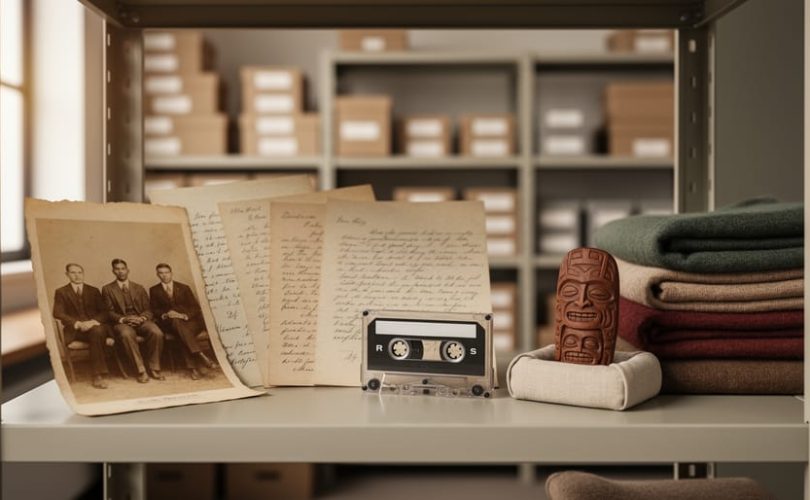
Primary source media in Aboriginal contexts refers to original materials created by or directly about Indigenous peoples at the time of an event, practice, or cultural expression. These sources include oral histories recorded by community Elders, photographs taken during ceremony or daily life, handwritten letters and diaries, audio recordings of languages and songs, film footage of cultural practices, and artifacts documented in their original setting. Understanding what qualifies as a primary source in Indigenous collections requires moving beyond Western academic definitions to recognize that Aboriginal communities themselves determine what materials hold primary significance and how they should be interpreted.
The importance of primary source media in Aboriginal collections cannot be overstated. These materials serve as evidence of continuous cultural practice, document historical injustices, preserve languages facing extinction, and provide irreplaceable connections for community members separated from their heritage through colonization and forced removal policies. A single photograph or audio recording can reunite families, revive ceremonial knowledge, or prove land rights in court.
Yet accessing and using these sources demands different protocols than conventional archival research. Many Aboriginal primary sources contain restricted cultural knowledge, depict deceased persons whose names cannot be spoken in certain communities, or represent sacred practices not meant for public viewing. Researchers and educators must understand that Indigenous peoples retain cultural authority over these materials regardless of where they are physically housed. Proper engagement requires building relationships with communities, seeking permission before use, and recognizing that some sources may be accessible for viewing but not for citation, reproduction, or analysis.
This article examines how to identify, access, and work ethically with primary source media in Aboriginal collections while respecting Indigenous sovereignty and cultural protocols.
Understanding Primary Source Media in Aboriginal Contexts
In Aboriginal research, primary source media encompasses materials created by indigenous peoples themselves, documenting their experiences, knowledge, and perspectives firsthand. These sources stand as direct evidence of Aboriginal voices, cultures, and histories, unfiltered by colonial interpretation or external mediation. Unlike conventional academic definitions that privilege written documents from institutional archives, Aboriginal primary sources recognize the validity and authority of oral traditions, community knowledge, and cultural protocols that predate and exist alongside Western documentary practices.
The distinction matters profoundly. Traditional academic frameworks often categorized indigenous knowledge as “secondary” or anecdotal because it didn’t conform to European standards of documentation. This classification reinforced colonial erasure and positioned indigenous peoples as subjects to be studied rather than authorities on their own histories. Aboriginal primary source media challenges this hierarchy by centering materials created within indigenous communities, for indigenous purposes, regardless of format or institutional validation.
- Oral Histories
- Recorded testimonies and spoken accounts from community members that transmit cultural knowledge, personal experiences, and historical events through direct voice. These capture nuances, emotions, and cultural contexts often lost in written transcription.
- Archival Recordings
- Audio and video documentation of ceremonies, gatherings, language use, and cultural practices captured in their original form. These preserve embodied knowledge including tone, gesture, and environmental context that text cannot convey.
- Community Documents
- Written materials created by Aboriginal individuals and organizations, including meeting minutes, correspondence, newsletters, and reports that reflect self-determined priorities and perspectives. These demonstrate indigenous agency and organizational structures often ignored in mainstream historical records.
- Visual Materials
- Photographs, artwork, and video created by indigenous peoples that document community life, cultural practices, and historical events from an insider perspective. These challenge externally imposed visual narratives and stereotypes.
- Language Recordings
- Documentation of indigenous languages in use, including conversations, storytelling, songs, and teaching sessions that preserve linguistic knowledge and demonstrate living cultural continuity. These materials prove essential for language revitalization and cultural education.
The unique nature of Aboriginal primary sources extends beyond format to encompass cultural protocols and community relationships. A ceremonial recording holds different meanings and access requirements than a government document. Oral histories carry the authority of lived experience and cultural transmission, not merely “subjective opinion” as colonial frameworks might suggest. Community-generated materials reflect indigenous priorities, decision-making processes, and worldviews that contrast sharply with external accounts produced during the same periods.
This expanded definition recognizes that Aboriginal peoples have always been documentarians of their own experiences, even when colonial systems failed to preserve or respect those records. Primary source media in Aboriginal contexts includes everything created by indigenous peoples to record, preserve, and transmit their knowledge, culture, and history, whether a wax cylinder recording from 1910, a community radio broadcast from 1985, or a digital story project from last year.
The Value of Unmediated Indigenous Voices
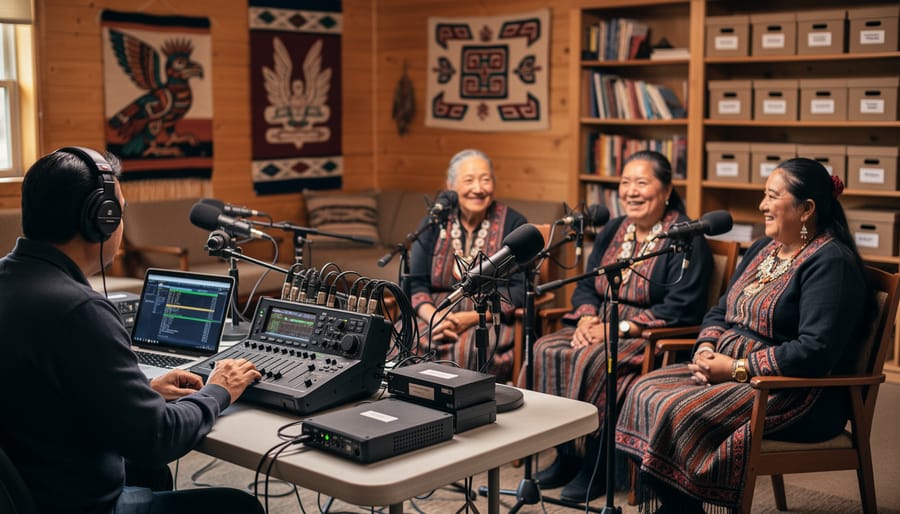
Countering Historical Erasure
For decades, mainstream historical accounts systematically excluded Aboriginal perspectives, creating a colonial narrative that portrayed indigenous peoples as passive subjects rather than active participants in their own histories. Primary source media challenges this erasure by documenting events, experiences, and viewpoints that government records, academic texts, and mainstream media deliberately overlooked or distorted.
These materials capture residential school survivors speaking about their experiences in their own words, community leaders discussing land rights negotiations from indigenous perspectives, and families documenting the impacts of forced relocations, events often whitewashed or omitted entirely from official histories. A government report might summarize a treaty negotiation in bureaucratic language, but primary source recordings preserve the actual voices of indigenous negotiators, their concerns, their objections, and the promises made to them.
Primary sources also document the continuity of Aboriginal cultural practices, languages, and governance systems during periods when colonial authorities claimed these traditions had disappeared. Community newsletters, meeting minutes, and correspondence reveal thriving cultural and political life even when mainstream sources portrayed indigenous communities as vanishing or assimilated.
This documentation becomes particularly powerful in legal contexts, where primary sources have proven instrumental in land claims cases and treaty rights disputes. When mainstream historical records are silent or misleading, these materials provide irrefutable evidence of indigenous presence, practices, and perspectives that counter centuries of historical marginalization.
Cultural Knowledge Transmission
Primary sources serve as living repositories of cultural memory, capturing traditional knowledge systems, ceremonial practices, and indigenous languages as they were authentically expressed by community members. Unlike secondary accounts filtered through non-indigenous perspectives, these materials preserve the original context, nuances, and cultural frameworks that give meaning to Aboriginal practices. A recorded elder’s explanation of seasonal harvest protocols, for instance, contains not just practical information but embedded worldviews about reciprocity, land relationships, and intergenerational responsibility, layers of meaning that translations or academic summaries often flatten or lose entirely.
This preservation function has become critically important for language revitalization efforts, where indigenous primary sources documenting fluent speakers provide essential pronunciation guides, vocabulary contexts, and grammatical structures for younger generations learning endangered languages. Audio recordings from decades past now serve as teaching materials in language nests and immersion programs, allowing contemporary learners to hear their ancestral tongue spoken naturally rather than through non-native instruction.
Beyond language, primary sources document traditional ecological knowledge, healing practices, artistic techniques, and governance systems that communities are actively working to maintain and strengthen. A filmed demonstration of traditional weaving methods preserves technical skills alongside the stories and cultural significance embedded in the craft. These materials function as both historical records and practical resources for cultural continuity, bridging past and present in ways that support community-led revitalization initiatives while maintaining the integrity of the knowledge itself.
Types of Primary Source Media in Aboriginal Collections
Audio-Visual Materials
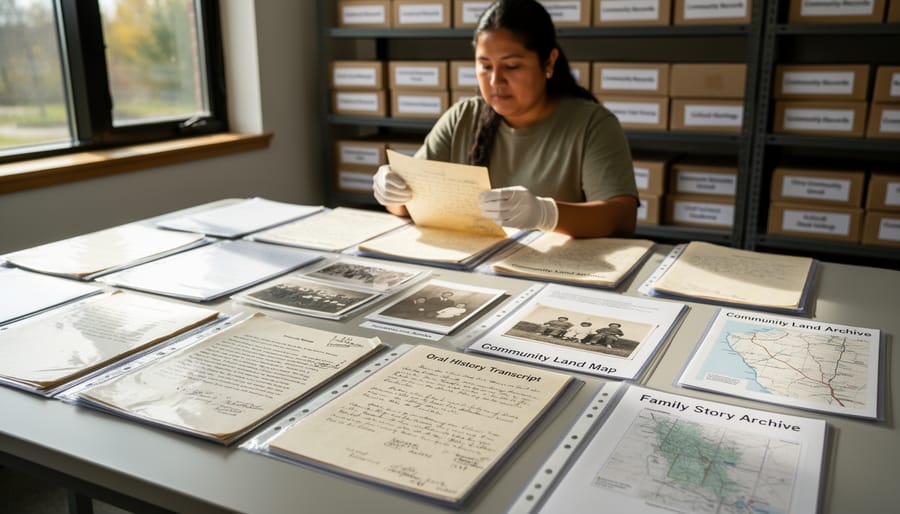
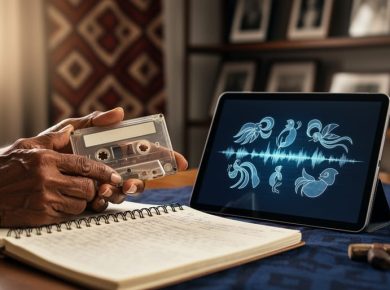
Audio-visual materials form the heartbeat of Aboriginal primary source collections, capturing voices, languages, and cultural practices in their lived, spoken form. These recordings preserve dimensions of indigenous knowledge that text alone cannot convey, the cadence of a language, the emotion in a storyteller’s voice, the gestures accompanying a teaching, the sounds of ceremony and community life.
Recorded interviews with Elders and knowledge-keepers stand among the most valuable audio-visual primary sources. These conversations, often conducted in indigenous languages, document first-hand experiences of treaty negotiations, residential schools, land struggles, and traditional ways of life. The speaker’s own words, unfiltered by a journalist’s interpretation or academic paraphrasing, provide direct access to indigenous perspectives and lived realities. Oral history recordings extend this further, preserving creation stories, historical accounts, and cultural teachings exactly as community members share them, maintaining the oral tradition in a fixed format that future generations can study and learn from.
Language documentation recordings serve dual purposes: they are research materials for linguists and educators, and vital resources for language revitalization efforts. Audio and video documentation of fluent speakers becomes increasingly precious as languages face endangerment, offering pronunciation guides, grammatical structures, and contextual usage that written texts cannot fully capture.
Visual documentation, including photographs and film footage of ceremonies, gatherings, land-based practices, and daily community life, provides irreplaceable evidence of cultural continuity and change. These materials show rather than tell, revealing details of traditional crafts, seasonal activities, social structures, and environmental knowledge that written descriptions might miss or misrepresent.
Community-Generated Documents
Aboriginal communities have produced extensive written records that offer direct insight into their own perspectives, priorities, and experiences. These community-generated documents stand as powerful primary sources precisely because they were created by indigenous peoples themselves, for their own purposes, rather than by external observers or government agencies.
Personal correspondence between community members, letters to government officials, and internal communications reveal how Aboriginal peoples articulated their concerns, advocated for their rights, and maintained relationships across distances. Meeting minutes from band councils, political organizations, and advocacy groups document decision-making processes and community priorities in indigenous peoples’ own words. Community newsletters and newspapers, many published in Aboriginal languages alongside English or French, provided platforms for sharing news, expressing political positions, and maintaining cultural connections.
Personal diaries, memoirs, and unpublished manuscripts offer intimate perspectives on daily life, challenges faced, and cultural practices maintained despite colonial pressures. Land claim documents, petitions, and formal submissions to government bodies demonstrate how communities articulated their territorial rights and sovereignty using both indigenous knowledge systems and legal frameworks imposed upon them.
These materials hold particular research value because they reflect Aboriginal agency, self-determination, and resistance. They show communities actively shaping their own narratives rather than passively accepting external definitions of their identities and histories.
Contemporary Indigenous Media
Contemporary Indigenous Media
Aboriginal communities today actively create primary source materials that document their own experiences, perspectives, and cultural practices through digital platforms and modern communication technologies. These contemporary formats represent a continuation of indigenous self-representation traditions while leveraging new tools for broader reach and preservation.
Community radio stations produce audio content that captures local voices discussing current issues, cultural knowledge, and community events. These broadcasts become valuable primary sources documenting Aboriginal perspectives on contemporary matters as they unfold. Similarly, podcasts created by indigenous producers offer unfiltered commentary and storytelling that future researchers will analyze to understand this era.
Digital storytelling projects allow community members to share personal narratives through video, combining oral tradition with visual media. Many Aboriginal organizations now archive these projects, recognizing their value as primary documentation of lived experiences and cultural continuity.
Social media posts, blogs, and online community forums generated by Aboriginal individuals and groups constitute emerging primary sources. These platforms capture immediate reactions to events, grassroots organizing, language revitalization efforts, and cultural commentary in real time. Self-produced documentaries and YouTube channels created by indigenous filmmakers document perspectives often excluded from mainstream media, preserving viewpoints and stories communities choose to share publicly.
Ethical Considerations When Working with Aboriginal Primary Sources
Community Ownership and Control
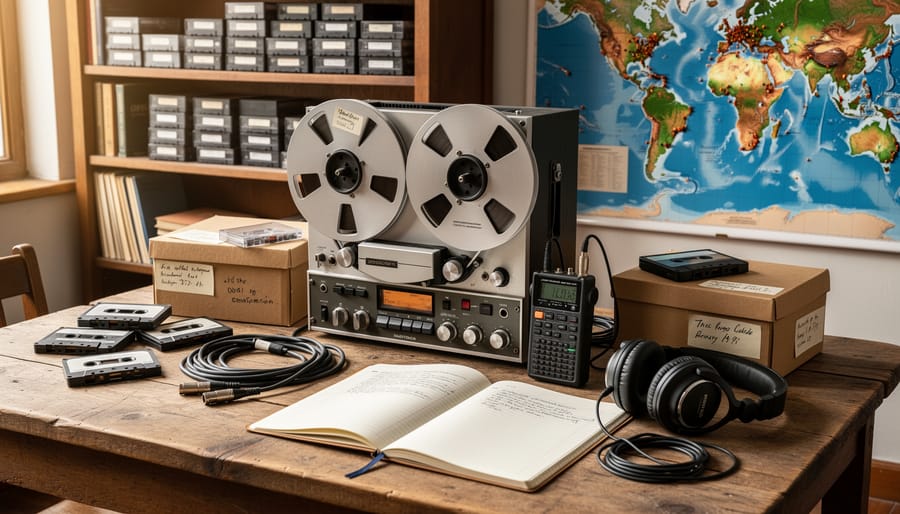
Aboriginal communities hold inherent rights to control their own historical materials, cultural knowledge, and personal stories, a principle increasingly recognized through frameworks of indigenous data sovereignty. Unlike Western archives that traditionally assume institutional ownership, authentic Aboriginal collections acknowledge that communities remain the rightful owners and decision-makers regarding their primary sources, even when materials are held in external repositories.
The OCAP® principles (Ownership, Control, Access, and Possession) have become foundational in this area, establishing that First Nations maintain ownership of cultural knowledge and data about their communities, including historical recordings and documents. OCAP supports self-determination by ensuring communities decide who can access their materials, how they may be used, and what context must accompany them. This extends to determining whether certain recordings, photographs, or documents should remain restricted due to ceremonial significance, family privacy, or cultural protocols that outsiders may not understand.
For researchers, this means Aboriginal primary sources cannot be treated as freely available public domain materials. Access often requires community consultation, formal permission processes, and agreements about how findings will be shared. Some collections maintain protocols where community representatives review research proposals, certain materials remain viewable only on-site or by community members, and elders may need to approve specific uses. These aren’t bureaucratic obstacles, they’re expressions of sovereignty that protect against historical patterns of extraction where indigenous knowledge was taken, decontextualized, and used without consent or benefit to the communities who created it.
Appropriate Use and Attribution
When you cite Aboriginal primary source media, go beyond standard academic conventions. Include the community of origin, cultural context, and any permissions or protocols that governed your access. If an Elder shared an oral history, name them (with permission), acknowledge their nation, and note the circumstances of the recording. This transparency honours the source and helps future researchers understand the material’s context.
Contextualization matters profoundly. Don’t extract a quote or image to suit your argument while ignoring its cultural meaning or the circumstances of its creation. A ceremony recorded in 1975 wasn’t captured in a vacuum, understand the political climate, the community’s relationship with researchers at that time, and what was happening to indigenous rights. Present primary sources as complete communications from real people with agency, not as raw data for your analysis.
Avoid parachuting into collections, taking what you need, and disappearing. Share your findings with source communities when appropriate. Acknowledge that you’re interpreting someone else’s story, not discovering hidden truth. If community members offer different readings of a primary source, that perspective deserves weight, they know their own history. Attribution means crediting not just individual creators but the cultural knowledge systems and communities that shaped those primary sources.
Restricted and Sensitive Materials
Not all primary source materials can or should be freely accessible. Aboriginal collections contain sacred items, secret-sacred knowledge, and materials related to restricted ceremonies that only certain community members may view under specific cultural protocols. Personal information about living individuals, family histories involving sensitive matters, and materials documenting trauma require protection for privacy and community wellbeing. Even in Aboriginal media online collections, these restrictions remain essential. Access limitations aren’t barriers to research, they’re expressions of cultural sovereignty and respect for indigenous knowledge systems. Communities retain authority over their cultural materials, determining who can access what and under which circumstances. Researchers must accept that some sources are not theirs to use, recognizing that cultural protocols governing restricted materials have protected sacred knowledge for countless generations. These boundaries ensure primary sources serve community interests first, not just academic inquiry.
How to Access and Utilize Primary Source Collections
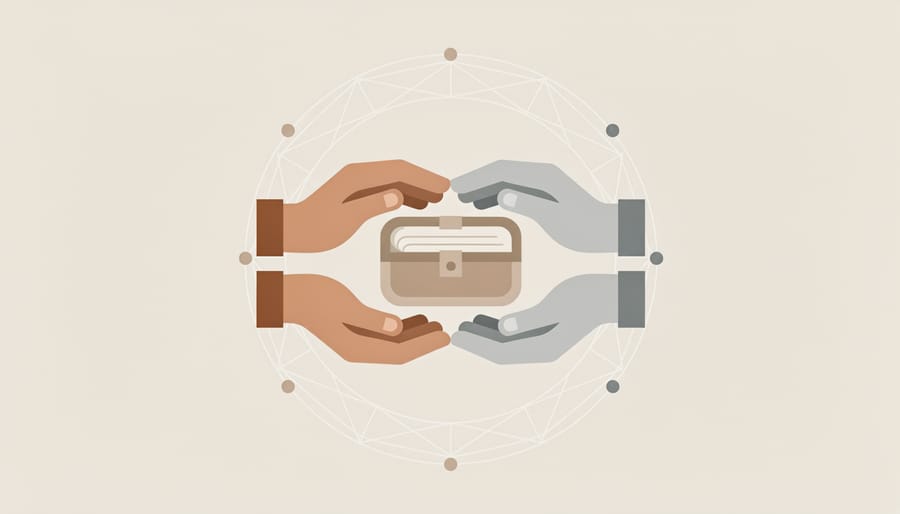
Building Relationships with Source Communities
Engaging with Aboriginal communities is not an optional courtesy, it’s a fundamental prerequisite for ethical research with primary source media. Before accessing any materials, researchers must establish genuine relationships with the communities whose histories and cultures they seek to study. This means reaching out to community leaders, cultural authorities, and knowledge keepers to explain your research intentions, seek permission, and invite collaboration.
These conversations should begin months before you need access to materials. Share your research questions openly and ask how your work might benefit the community. Listen carefully to concerns and be prepared to adjust your approach or even abandon research directions that communities find inappropriate. This isn’t about checking a box, it’s about recognizing that Aboriginal peoples are sovereign nations with the right to determine how their stories are told.
During your research, maintain regular communication. Share preliminary findings, seek feedback on interpretations, and ensure community members understand how you’re using their materials. Many communities appreciate opportunities to review drafts before publication, which can prevent misrepresentation and strengthen your work through indigenous insights.
After completing your research, return to share results in accessible formats. Provide copies of publications, offer presentations at community venues, and discuss how findings might support community goals. Some researchers establish ongoing relationships, returning for follow-up projects or supporting community-led initiatives. This reciprocal approach transforms research from extraction into partnership, ensuring primary sources serve the communities they document.
Digital Versus Physical Collections
Digital collections offer unprecedented reach, enabling researchers worldwide to access materials that once required physical travel to specific repositories. Online Aboriginal media collections remove geographical barriers, allowing community members in remote areas to reconnect with their cultural heritage and historical records. Digitization also protects fragile originals from handling damage while making materials searchable through metadata and transcription.
However, digital formats present significant limitations. Compression can degrade audio quality in oral histories, potentially obscuring subtle linguistic nuances essential for language revitalization. Photographs lose textural details visible in original prints, annotations on the reverse, the weight of particular paper stocks, or physical evidence of how an image was stored and valued. Scanning decisions made by archivists determine what gets captured; a document’s margins, reverse side, or accompanying envelope might be excluded, erasing contextual clues researchers need.
Access equity cuts both ways. While digitization reaches distant users, it assumes reliable internet connectivity and digital literacy, resources not uniformly distributed across Aboriginal communities. Some elders and knowledge keepers prefer engaging with physical materials during consultations, finding tactile interaction more culturally appropriate than screen-based review.
Preservation considerations favor maintaining both formats. Physical materials remain the authoritative source; digital copies depend on technological infrastructure, file format longevity, and institutional commitment to migration across evolving platforms. The most robust approach combines careful physical stewardship with thoughtful digitization that serves access while acknowledging what translation to digital inevitably loses.
The Role of Primary Sources in Contemporary Aboriginal Research
Primary source media has become central to contemporary Aboriginal research across multiple domains, demonstrating its power to transform both academic scholarship and community-based initiatives. In universities and research institutions, indigenous scholars increasingly ground their work in primary sources that reflect community voices rather than colonial interpretations. These materials provide the evidence needed to challenge longstanding historical narratives, reconstruct accurate timelines of events, and center indigenous agency in stories that were previously told from outsider perspectives.
Language revitalization programs depend heavily on audio recordings and linguistic documentation found in primary source collections. Communities working to restore languages that were suppressed through residential schools and assimilation policies turn to recordings of fluent speakers, often elders who have since passed, as essential teaching tools. These recordings preserve pronunciation, grammatical structures, and cultural context that cannot be replicated through second-hand documentation. Young people learning their heritage languages connect with the voices of their ancestors directly, creating powerful intergenerational links.
Cultural education initiatives within Aboriginal communities draw extensively on primary source media to teach younger generations about their history and traditions. Rather than relying on textbooks written by non-indigenous authors, educators use oral histories, community-generated videos, and archival photographs to provide authentic learning experiences. The digital access benefits have expanded these educational possibilities, allowing remote communities to access materials that would otherwise require travel to distant archives.
Legal proceedings increasingly recognize primary source media as critical evidence in land claims, treaty negotiations, and rights cases. Oral histories documented decades ago now serve as legal testimony, while historical photographs and community records establish patterns of land use and occupancy. Courts have begun acknowledging that indigenous knowledge systems, preserved through primary sources, constitute valid forms of evidence alongside Western documentation.
Community-led digital media projects continue creating new primary sources while leveraging historical materials. These initiatives document contemporary experiences, ensuring future researchers will have access to authentic indigenous perspectives from 2026, just as today’s scholars benefit from materials created decades earlier.
Primary source media stands as the bedrock of authentic Aboriginal historical research, offering something no secondary account can replicate: direct access to indigenous voices, experiences, and perspectives in their original form. These materials don’t just document history, they actively counter centuries of misrepresentation, filling gaps that colonial narratives deliberately created and preserving knowledge systems that mainstream archives ignored or suppressed.
For researchers, educators, and community members alike, primary sources represent more than academic resources. They are tools of cultural reclamation, evidence in legal battles for rights and recognition, and bridges connecting younger generations to languages and traditions that colonization nearly erased. The difference between reading someone’s interpretation of an elder’s teaching and hearing that elder’s voice directly cannot be overstated.
Yet this power demands responsibility. As you engage with Aboriginal primary source media, remember that these aren’t neutral artifacts, they hold the stories, knowledge, and sometimes sacred content of living communities. Approach them with the respect their creators and subjects deserve. Build genuine relationships with source communities before extracting material for your purposes. Understand why online matters while recognizing that digital access must never bypass community protocols or sovereignty over cultural materials.
The work of collecting, preserving, and making accessible Aboriginal primary sources remains unfinished. Gaps persist, particularly in representing diverse nations, languages, and perspectives. Moving forward requires collection practices centered on community needs and control, not institutional convenience. When handled with care and cultural humility, primary source media becomes what it should be: a foundation for indigenous self-determination and historical truth-telling on indigenous terms.