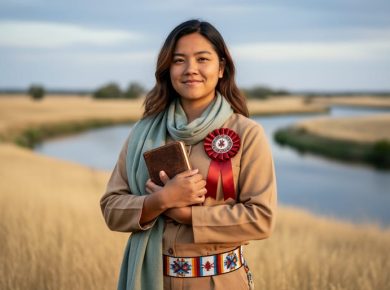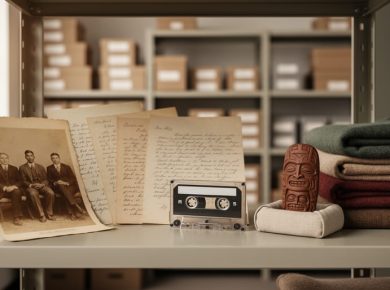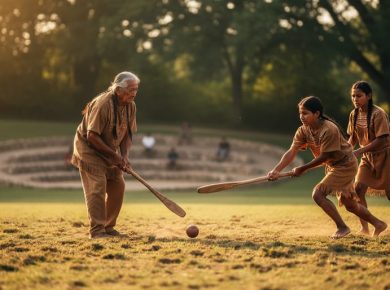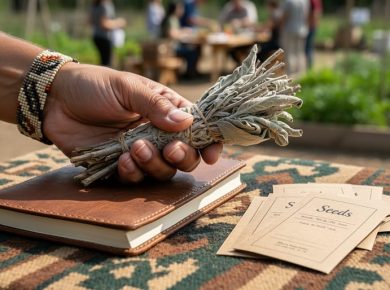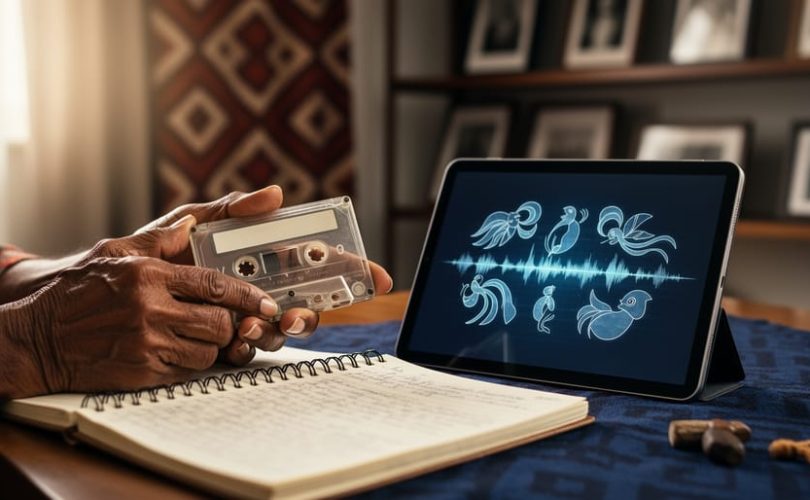
Media collections online provide digital access to Aboriginal cultural materials, languages, art, and historical records through platforms designed and increasingly controlled by indigenous communities themselves. These repositories represent more than digitized archives. They are active spaces of cultural reclamation, education, and sovereignty, where Elders’ voices, traditional stories, ceremonial knowledge, and linguistic resources reach both community members and outside learners under terms set by the communities who created them.
The shift to digital platforms has fundamentally changed who controls Aboriginal narratives. For generations, museums, universities, and government institutions held cultural materials extracted from communities, often without consent. Now, indigenous-led collections like the Mukurtu platform, AIATSIS Collections, and locally managed tribal archives return agency to communities, allowing them to determine access levels, protect sacred knowledge, and share resources on their own terms. A language recording accessible to enrolled tribal members but restricted to outsiders. A ceremony description visible only after cultural protocols are explained. These aren’t technical features but expressions of cultural authority.
Educators building curriculum, researchers seeking primary sources, and community members reconnecting with language or ceremony all turn to these collections, yet each approaches with different needs and responsibilities. The materials available range from audio recordings of fluent speakers documenting languages on the edge of silence to digitized bark paintings, historical photographs with complex colonial histories, and contemporary oral histories recorded by community knowledge keepers in 2026. What unites them is their cultural significance and the careful negotiation required to share them ethically.
Understanding how these collections function means recognizing both their promise and ongoing challenges: bandwidth limitations in remote areas, funding constraints, the delicate balance between access and protection, and the continuing work of repatriation. These are living archives, evolving as communities reclaim their digital presence and assert sovereignty over their own stories.
The Cultural Significance of Digitizing Aboriginal Media
Beyond Preservation: Media as Living Knowledge
Aboriginal media collections transcend traditional archival work because they hold knowledge that continues to breathe, grow, and shape present realities. When an elder’s voice shares a creation story through a digitized recording, that story doesn’t exist as a historical artifact, it actively teaches children today the same lessons it taught generations ago. These collections function as living classrooms where language flows, cultural protocols transmit, and ancestral wisdom guides contemporary decision-making.
Consider how a grandmother in urban Melbourne might access recordings of her own grandmother’s voice speaking language she never learned growing up. That digital file becomes a bridge across displacement, a catalyst for healing intergenerational trauma, and a foundation for identity reclamation. The recording doesn’t merely preserve the past; it actively participates in creating futures where culture survives and thrives.
These collections also evolve through use. Community members add context, correct misattributions, and layer contemporary knowledge onto historical materials. A recording from 1970 gains new meaning when today’s language teachers annotate it with phonetic guides, or when knowledge holders explain ceremonial contexts that weren’t originally documented. The collection becomes a conversation spanning decades.
This living quality fundamentally challenges Western archival concepts that treat indigenous materials as fixed objects for study. Aboriginal media collections operate more like seeds than monuments, planted in digital soil, they grow new connections, yield harvests of understanding, and generate cultural continuity. They prove that indigenous knowledge systems adapt without losing their essential character, remaining simultaneously ancient and entirely relevant to the challenges communities face in 2026.
Addressing Historical Gaps and Stolen Narratives
For over a century, Aboriginal stories sat locked in colonial institutions, museums, universities, government archives, catalogued by outsiders, interpreted through foreign frameworks, stripped of context and ceremony. Researchers arrived, recorded, and left. The tapes, photographs, and field notes remained behind glass and locked doors, inaccessible to the very communities they documented. Families couldn’t hear their grandparents’ voices. Language teachers couldn’t access recordings of fluent speakers. Communities had to request permission to view their own cultural materials.
Digital collections dismantle this extractive legacy. When online collections reclaim agency they return control to Aboriginal peoples who can now decide how their stories are shared, who can access them, and under what conditions. A Noongar elder in Western Australia can review archival recordings before they go public, flagging material too sacred for general access. A Wiradjuri language program can download audio files of ceremonial songs once held hostage by institutional gatekeepers.
This shift matters beyond access. It corrects the historical record. Colonial archives often mislabeled communities, mistranscribed languages, and imposed categories that served administrative convenience rather than cultural accuracy. Community-led digitization projects restore proper names, correct errors, and add context that only knowledge-holders can provide. The stories remain, but the power to interpret them has finally come home.
What Makes an Effective Online Aboriginal Media Collection
Community Ownership and Consent Protocols
Aboriginal media collections built on OCAP principles recognize a fundamental truth: communities aren’t just stakeholders in their cultural materials, they are the rightful governors. OCAP guides Indigenous governance by establishing that Ownership means communities collectively own their cultural knowledge and data, even when institutions physically house materials. Control determines who accesses what and under which circumstances. Access ensures communities decide how outsiders engage with their resources, including researchers and educators. Possession refers to both physical custody and the mechanisms communities use to protect and manage their heritage.
These aren’t abstract concepts. When a language archive includes recordings of elders who have passed, the family and community retain the right to determine whether those voices should be publicly available or restricted to specific uses. Some knowledge carries gender restrictions or should only be shared at certain times of year. Ethical collections embed these protocols directly into their access systems, requiring users to explain their intended use and sometimes obtain explicit permission before viewing sensitive materials.
The shift toward community ownership also means decision-making power sits with Aboriginal people, not archivists or academics. If a community determines that certain recordings should be taken offline, that decision stands, even if researchers protest the loss of access. Consultative committees made up of knowledge keepers, elders, and community representatives review materials regularly, ensuring consent remains ongoing rather than a one-time checkbox. This approach acknowledges that cultural protocols evolve and communities may develop new understandings about what should be shared as circumstances change.
Balancing Accessibility with Cultural Sensitivity
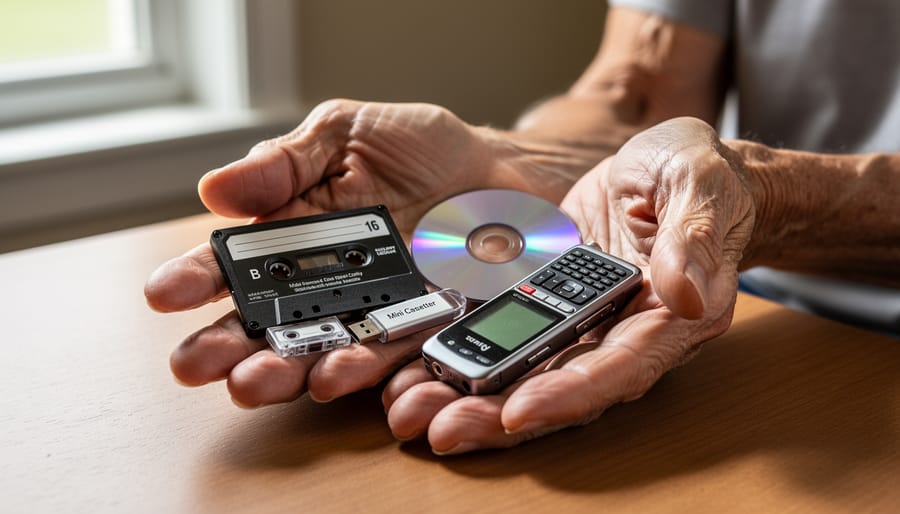
Opening Aboriginal media collections to the world requires careful navigation of competing values. Not all knowledge belongs in public view. Many Aboriginal communities maintain strict protocols about who can see, hear, or share certain materials, distinctions that colonial archives historically ignored.
Gender restrictions present one common challenge. Men’s and women’s business often involves separate ceremonies, stories, and sacred objects. A collection that displays restricted men’s business to women, or vice versa, commits a serious cultural violation. Digital platforms must build in access controls that honor these boundaries without explaining why specific materials are restricted, as the reasons themselves may be sacred.
Seasonal and ceremonial timing matters too. Some songs, stories, or images should only be accessed during particular times of year or life stages. Online availability creates perpetual access that conflicts with these rhythms. Solutions range from time-limited releases to warning labels that ask users to respect traditional protocols even when technical barriers don’t exist.
Sacred or secret materials pose the most difficult questions. Some knowledge was never meant for recording at all. When such recordings exist, often made without proper consent, communities face a painful choice: leave them in non-indigenous hands, or bring them home knowing digitization risks wider exposure.
The best collections involve communities at every decision point. Elders, knowledge holders, and cultural authorities determine what goes online, who can access it, and under what conditions. This isn’t slower or more complicated than standard archival practice, it’s the only ethical approach when the material isn’t yours to share.
Types of Media Resources in Aboriginal Collections
Audio and Language Archives
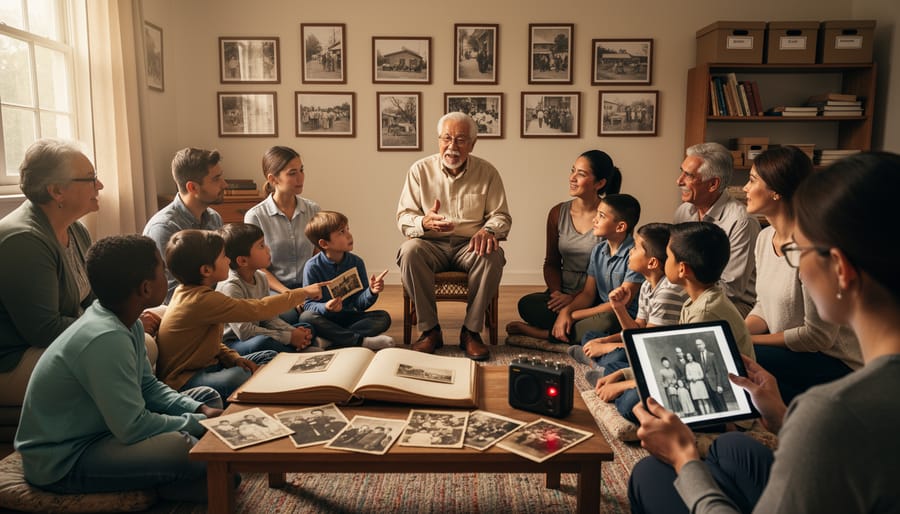
Audio recordings form the foundation of many Aboriginal media collections, capturing voices that carry thousands of years of knowledge and cultural memory. For communities working to revitalize endangered languages, these archives are irreplaceable, they hold pronunciations, intonations, and linguistic patterns that written texts cannot fully convey. A single recording of an elder speaking can reveal subtle grammatical structures, regional dialects, and teaching methodologies embedded in the language itself.
Language archives typically include structured documentation such as wordlists, conversational exchanges, and narrative storytelling sessions recorded over decades. These materials serve multiple purposes: linguists analyze them to understand phonetic systems, language teachers extract them for classroom lessons, and community members listen to reconnect with voices of relatives and ancestors. Many collections also preserve traditional songs, which often encode ceremonial knowledge, seasonal cycles, and historical events through melody and rhythm that must be heard to be understood.
The urgency of this work becomes clear when considering that many recordings feature the last fluent speakers of certain languages. When elders share creation stories, recount historical events, or explain traditional practices on tape, they’re not simply being documented, they’re teaching future generations in their own words, with their own emphases and humor intact. These recordings preserve not just vocabulary but the entire communicative context: pauses for emphasis, laughter, the cadence of oral teaching traditions that have sustained Aboriginal cultures for millennia.
Visual and Audiovisual Documentation
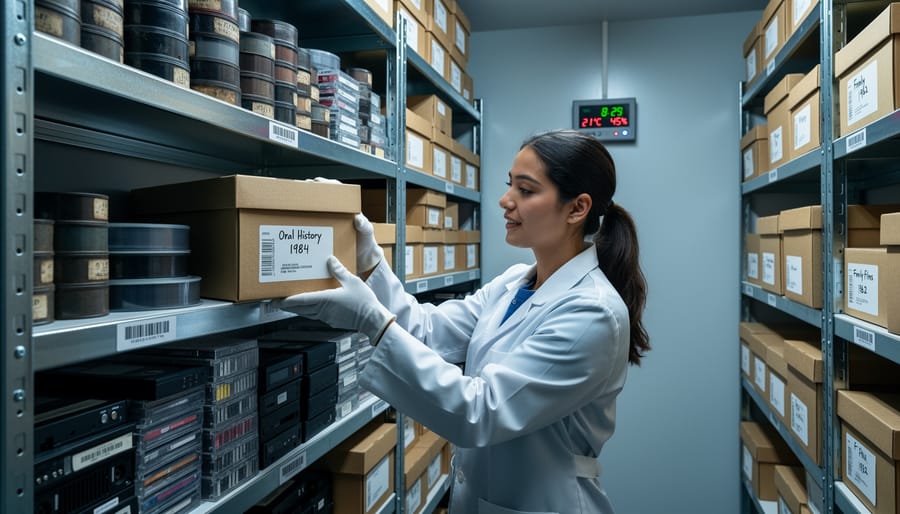
Visual documentation of Aboriginal life spans more than a century, capturing everything from daily activities and family gatherings to cultural ceremonies and political movements. Early photographs, many taken by missionaries or anthropologists, now exist alongside community-controlled images that offer Indigenous perspectives on their own histories. These photographs serve multiple purposes: they help families identify ancestors, provide evidence of continuous occupation of traditional lands, and document cultural practices that have survived colonial disruption.
Film and video collections have evolved dramatically since the mid-20th century. Where early footage was often exploitative or sensationalized, contemporary collections increasingly feature community-led documentary projects that center Aboriginal voices and viewpoints. Projects like language documentation films, oral history interviews, and cultural teaching videos preserve knowledge while respecting protocols about what should and shouldn’t be shared publicly.
Community-led media initiatives have transformed how visual materials are created and managed. Aboriginal filmmakers, photographers, and digital storytellers now produce content that challenges stereotypes and asserts contemporary Indigenous identities. These collections include everything from formal documentaries to social media content, reflecting the full spectrum of Aboriginal life in 2026 rather than freezing communities in a romanticized past.
The most effective collections recognize that visual media carries different protocols than text. Some materials may have viewing restrictions based on gender, age, cultural status, or community membership. Collections must balance the educational value of visual documentation with respect for privacy, sacred knowledge, and family wishes about how ancestors are represented.
Textual and Written Materials
While audio and visual media capture the immediacy of voice and image, written materials in Aboriginal collections serve as crucial companions that deepen understanding and expand accessibility. Transcriptions transform oral recordings into searchable, teachable text, essential for language learners working with pronunciation guides or researchers tracing specific stories across variants. Many collections include handwritten field notes from community knowledge-holders, correspondence between elders and institutions, and traditional stories rendered in both Aboriginal languages and English translations that preserve linguistic nuance often lost in casual interpretation.
Research reports and community publications round out these holdings: land use studies documenting traditional territories, self-published histories reclaiming narratives from colonial accounts, and newsletters that chronicle decades of community organizing. Unlike materials created by outsiders, community-authored texts center indigenous perspectives and methodologies. These written resources don’t replace multimedia; they illuminate context, provide linguistic precision, and ensure collections remain useful even when bandwidth or technology limits audio-visual access in remote communities.
How These Collections Serve Different Communities
Supporting Language Revitalization and Education
Language learners today face a profound challenge: many Aboriginal languages hover on the brink of extinction, with fluent speakers aging and traditional transmission pathways disrupted by colonization’s legacy. Online media collections have emerged as critical lifelines in this fight for linguistic survival.
Audio recordings of elders speaking naturally, not just reciting word lists, give learners access to proper pronunciation, intonation patterns, and the cultural context that breathes life into language. A grandmother’s story about hunting practices carries vocabulary that textbooks can’t capture: seasonal terms, place names, kinship references, and the rhythm of authentic speech. These recordings become teachers when no fluent speakers remain nearby.
Teachers building curriculum find these collections indispensable. Video clips of ceremonies, interviews about traditional practices, and recordings of songs provide authentic materials that connect language to lived experience. Instead of generic lessons, educators can design activities around their own community’s voices and stories, making learning personally meaningful.
Families scattered by residential schools or adoption now use these resources to reclaim what was taken. Parents listen alongside children, learning the words their own grandparents spoke. The collections don’t replace living conversation, but they create starting points, enough vocabulary and confidence to begin speaking at home, to ask questions, to rebuild what colonization fractured. This isn’t preservation of dead artifacts. It’s the foundation for living languages to grow again.
Empowering Research and Scholarship
Aboriginal media collections fundamentally reshape who controls research narratives and methodologies. When communities hold digital access to their own materials, recordings of elders, photographs from specific time periods, documentation of traditional practices, they can drive research agendas rather than serving as passive subjects for outside academics.
Indigenous scholars particularly benefit from direct access to materials their communities created. A researcher investigating traditional governance systems can now work with audio recordings of community meetings from the 1970s, cross-reference them with elder interviews, and build arguments grounded in community voices rather than colonial administrative records. This shifts the evidentiary base from what outsiders documented to what communities chose to preserve about themselves.
These collections also expose gaps and biases in mainstream scholarship. When a PhD student compares published ethnographic accounts with actual community recordings from the same period, contradictions emerge, revealing how researchers misunderstood concepts, ignored community expertise, or imposed their own frameworks. One collection might contain recordings where elders explicitly reject interpretations that became standard in academic literature.
Community-based research projects use these materials to answer questions that matter locally: land use patterns for legal cases, language evolution for revitalization programs, or family histories disrupted by residential schools. The research serves community needs first, with academic output as secondary. Graduate students from the community can pursue degrees while remaining grounded in local knowledge systems and accountable to community protocols rather than purely Western academic standards.
Challenges Facing Aboriginal Media Collections in 2026
Despite growing awareness of their importance, Aboriginal media collections face significant obstacles that threaten their sustainability and effectiveness. Funding remains perhaps the most persistent challenge: many collections operate on precarious year-to-year grants rather than stable institutional support. Indigenous-led archives often compete with mainstream cultural institutions for the same limited pool of resources, yet their work requires specialized protocols and community consultation that demand additional time and investment. When budgets shrink, digitization projects stall, metadata work stops, and crucial preservation activities get deferred.
The technological barriers extend beyond simple access to equipment. Digital preservation requires constant migration of files as formats become obsolete, regular backups, cybersecurity measures, and robust hosting infrastructure, all expensive and technically demanding. Many communities lack reliable high-speed internet, creating a painful irony where collections meant to serve remote Aboriginal communities remain effectively inaccessible to the very people they’re supposed to benefit. Smaller collections may lack the technical capacity to implement modern discovery tools, multilingual interfaces, or mobile-friendly platforms that users increasingly expect.
Repatriation issues complicate the landscape further. Thousands of Aboriginal recordings, photographs, and documents sit in non-indigenous institutions worldwide, universities, museums, private collections, government archives. Negotiating their return or even securing digital copies involves complex legal questions about copyright, ownership, and who has authority to grant access. Some materials were collected unethically or without proper consent decades ago, raising questions about whether they should be returned, restricted, or contextualized with explanatory notes about their problematic provenance.
Perhaps most critically, there’s a severe shortage of professionals who understand both archival best practices and indigenous cultural protocols. Effective stewardship of these collections requires people who can navigate OCAP principles, respect cultural restrictions, engage authentically with communities, and manage the technical demands of digital preservation. Training programs rarely address this intersection, leaving collections dependent on a small pool of specialists who are stretched thin across multiple projects. Without investment in developing this expertise, particularly among indigenous people themselves, collections risk being managed by well-meaning but culturally uninformed practitioners who may inadvertently cause harm.
The Path Forward: Building Sustainable Digital Futures
The future of Aboriginal media collections demands more than incremental improvements, it requires reimagining digital infrastructure through indigenous frameworks of sovereignty and self-determination.
Indigenous-led platforms are emerging as viable alternatives to mainstream institutional repositories. Projects like Mukurtu, developed by and for indigenous communities, demonstrate how technology can embed cultural protocols directly into the architecture of digital collections. These systems allow communities to set viewing permissions based on gender, age, clan affiliation, or ceremonial knowledge level, something impossible with conventional database designs. By 2026, multiple Australian Aboriginal organizations have adopted similar platforms that respect nuanced cultural protocols while maintaining technical sophistication.
Collaborative funding models are shifting power dynamics in collection development. Rather than relying solely on government grants with restrictive parameters, some communities now blend crowdfunding, philanthropic partnerships, and revenue from ethical licensing agreements. The Koorie Heritage Trust’s recent initiative, where cultural tourism revenue directly funds digitization work, exemplifies sustainable community-controlled financing that doesn’t compromise indigenous values for external funding.
Training programs specifically designed to develop indigenous digital archivists address the critical skills gap. NAHO’s mentorship initiatives pair emerging Aboriginal archivists with elders and technical experts, ensuring both cultural competence and technical proficiency. These programs recognize that effective custodians of Aboriginal media collections need deep cultural knowledge alongside archival expertise, credentials that can’t be separated.
Blockchain technology and decentralized storage offer promising solutions for protecting indigenous intellectual property. Some communities now explore using blockchain to create immutable records of ownership and consent, ensuring that even if materials circulate beyond their control, the provenance remains clear and community rights stay documented.
The trajectory is clear: sustainable Aboriginal media collections must center indigenous control at every level, governance, technology, funding, and staffing. External institutions can support this work, but leadership must remain with the communities whose stories fill these collections.
Online Aboriginal media collections stand as powerful instruments of cultural reclamation and self-determination. They represent more than digitized archives, they are living testimonies to resilience, survival, and the enduring strength of indigenous knowledge systems. When communities control how their stories are shared, preserved, and accessed, they reclaim narrative authority that colonial institutions long denied them.
These collections heal. Families separated by forced removals reconnect with ancestors’ voices. Young people discover cultural practices their grandparents couldn’t safely teach during darker times. Language speakers emerge from recordings that might otherwise have remained locked in institutional vaults. Each audio file, photograph, and video becomes a bridge across generations and geographical distances, mending ruptures caused by systematic cultural suppression.
They also educate in ways textbooks never could. Hearing an elder speak about country in their own language carries knowledge that written translations cannot capture. Watching ceremonial dances performed by those who inherited them through generations conveys cultural protocols no external researcher could authentically explain. This direct transmission of knowledge challenges colonial distortions and empowers indigenous peoples as the rightful authorities on their own histories.
The work remains unfinished. Funding constraints limit what collections can achieve. Technical barriers still exclude some communities. Repatriation of materials held by distant institutions proceeds too slowly. Yet momentum builds as more indigenous-led initiatives demonstrate sustainable models for digital sovereignty.
Engaging with these collections requires respect, humility, and recognition that access comes with responsibilities. These are not curiosities for casual consumption but sacred trusts shared conditionally. Approach them as opportunities to listen, learn, and support indigenous peoples’ ongoing efforts to preserve and transmit their cultural heritage on their own terms, for their communities first, and for the world only as they choose.