Showing 22 Result(s)
Close-up of glass lab vials with amber liquid and peptide-like crystal fragments on a dark surface under soft studio lighting, with blurred laboratory equipment in the background.

What Is the GLOW Peptide Blend (and What Does the Research Say)?

The GLOW peptide blend is a research-use combination of peptides marketed for skin, tissue repair, and cellular health, typically described as a mix of GHK-Cu, BPC-157, and TB-500. The GLOW peptide draws interest because each component has its own body of laboratory literature, and people understandably want to know whether combining them adds up to anything proven.
Here’s the honest answer: not yet. Most of what’s written about how these peptides work comes from cell studies and animal models, and those findings are hypotheses, not confirmed human outcomes. Human evidence is thin, and it varies a great deal from one peptide to the next.
That gap between claim…
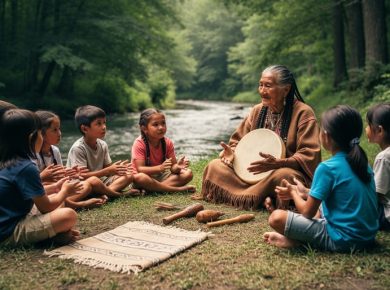
“Indigenous elder teaching children outdoors in a respectful circle with traditional learning materials and a drum”

What Is the History of Native American Education Systems (and How Did Traditional Learning Work)?

Native American history for elementary students examines how Indigenous peoples across North America created, maintained, and continue to preserve sophisticated systems of education, community life, and cultural knowledge spanning thousands of years before and after European contact. This educational approach focuses on centering Indigenous voices, correcting historical misrepresentations, and teaching young learners to understand Native American experiences through accurate, respectful narratives grounded in primary source media and community knowledge.
Understanding this history matters because elementary…

Close view of preserved lath-and-plaster wall texture and exposed aged timber framing in an Ontario century home interior with a worn stone threshold and soft daylight from historic wavy-glass windows.

Why Century Homes Hold Stories Worth Preserving—And How to Honor Them

Renovating a century home in Ontario means balancing modern comfort with respect for the stories held in timber, plaster, and stone. The key is to understand the building as a vessel of memory before you change it. Strip layers carefully, research period-appropriate materials, and consult heritage guidelines and experienced tradespeople who know old construction techniques. Successful preservation starts with listening to the house itself, recognizing that every home stands on land with deep histories that extend far beyond the structure’s own timeline.
In Ontario, century homes occupy territories stewarded by Indigenous peoples for millennia before European settlement. Acknowledging this context isn’t symbolic. It …

A Métis family outdoors on the prairie at dusk holding a medicine pouch and a braided sash, with soft golden light and a softly blurred background of land and community structures.

What Is Native Identity and Rediscovering God in Métis Communities (and How They Shape Well-Being)?

Native identity belonging refers to the deep, lived connection Métis and other Indigenous peoples maintain with their ancestral heritage, community networks, and spiritual traditions. It encompasses language, land-based knowledge, kinship systems, and the cultural practices that anchor individuals within a larger web of relationships spanning generations. Rediscovering God within this framework means reclaiming Indigenous spiritual worldviews that predate colonial suppression, a journey that often intertwines Christian faith with traditional teachings about the Creator, the land, and ceremonial life.
This connection matters profoundly for individual and collective well-being. Research consistently shows that Métis people who …

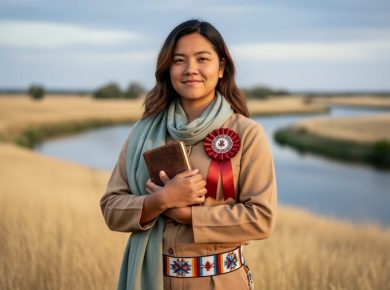
A Métis person in warm sunlight holding a small notebook and scarf in a prairie landscape, symbolizing identity, belonging, and cultural continuity.

What Are Quotes About Identity and Belonging (and How Do They Shape Métis Well-being)?

Quotes about identity and belonging are memorable expressions that articulate how individuals understand who they are, where they come from, and where they fit within their communities and the broader world. These statements, whether drawn from Elders’ teachings, contemporary Indigenous scholars, literary figures, or personal reflections, serve as anchors for self-understanding and collective connection, particularly within Métis and other Indigenous communities where colonial disruption has historically fractured these bonds.
The power of such quotes lies in their ability to capture complex truths in forms that can be remembered, shared, and returned to during moments of uncertainty or transformation. For Métis people …

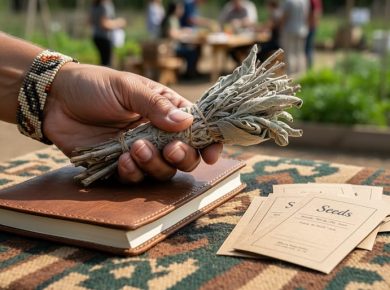
An Indigenous hand holding sage beside a notebook and seed packets in a natural outdoor setting, representing community stewardship of knowledge.

What Is Indigenous Data Sovereignty (and How Does It Empower Communities)?

Indigenous data sovereignty is the right of Indigenous peoples to govern the collection, ownership, and application of data about their communities, territories, cultures, and resources. It asserts that Indigenous nations possess inherent authority over information systems that affect them, challenging centuries of extractive research practices where outside institutions controlled how Indigenous knowledge and statistics were gathered, interpreted, and used.
This concept matters because data shapes policy, funding allocations, health interventions, and land management decisions that directly impact Indigenous lives. …

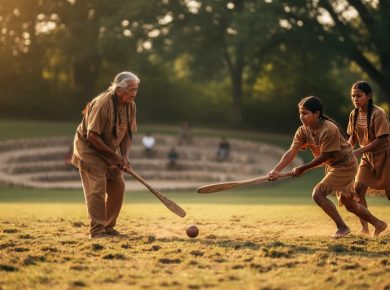
Indigenous elder and youth playing a traditional stick-and-ball game on an outdoor community field during golden hour.

How Indigenous Games Are Reclaiming Cultural Identity and Community Healing

Indigenous games are living archives of cultural knowledge, worldviews, and community values that have sustained Aboriginal and Native peoples across millennia. Far from simple recreational activities, these traditional games encode sophisticated systems of physical training, spiritual teaching, conflict resolution, and kinship building. They represent community-led methodologies for transmitting ecological knowledge, reinforcing social structures, and maintaining cultural continuity through embodied practice.
Contemporary research into indigenous games requires frameworks that honor community ownership, oral histories, and intergenerational transmission methods. …

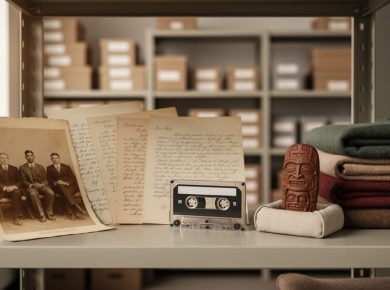
“A respectful archival display showing an old photograph, handwritten letter pages, an audio cassette, and a carved artifact on a fabric base, with the background softly blurred.”

Primary Source Media: The Foundation of Authentic Aboriginal Historical Research

Primary source media in Aboriginal contexts refers to original materials created by or directly about Indigenous peoples at the time of an event, practice, or cultural expression. These sources include oral histories recorded by community Elders, photographs taken during ceremony or daily life, handwritten letters and diaries, audio recordings of languages and songs, film footage of cultural practices, and artifacts documented in their original setting. Understanding what qualifies as a primary source in Indigenous collections requires moving beyond Western academic definitions to recognize that Aboriginal communities themselves determine what materials hold primary significance and how they should be interpreted.
The importance …

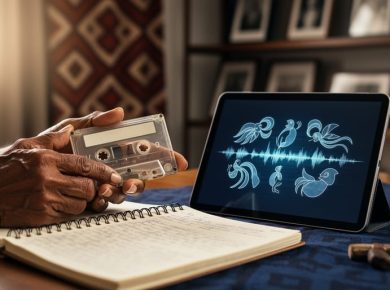
Elder’s hands holding an audio cassette and a language notebook next to a tablet with abstract visual media access, symbolizing Aboriginal media collections online.

Why Aboriginal Media Collections Online Matter More Than Ever

Media collections online provide digital access to Aboriginal cultural materials, languages, art, and historical records through platforms designed and increasingly controlled by indigenous communities themselves. These repositories represent more than digitized archives. They are active spaces of cultural reclamation, education, and sovereignty, where Elders’ voices, traditional stories, ceremonial knowledge, and linguistic resources reach both community members and outside learners under terms set by the communities who created them.
The shift to digital platforms has fundamentally changed who controls Aboriginal narratives. For generations, museums, universities, and government institutions held cultural materials …