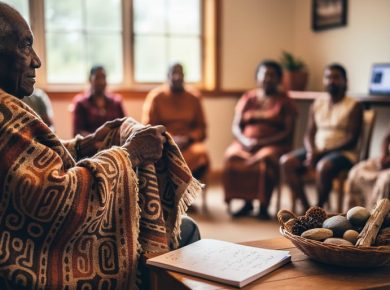
Contact community-based Indigenous financial institutions first—organizations like Aboriginal Financial Institutions (AFIs) and Indigenous-led credit unions offer $500 loan options with culturally informed lending practices and significantly lower interest rates than mainstream payday lenders. Reach out to your band office or tribal council about emergency assistance programs; many First Nations, Métis, and Inuit governments maintain confidential emergency funds specifically designed to prevent community members from falling into predatory lending cycles.
Connect with local friendship centres or Indigenous financial literacy programs that can provide same-day guidance on accessing traditional sharing circles, emergency relief networks, or negotiating payment plans with creditors—alternatives rooted in collective support rather than extractive debt. Explore provincial or territorial income assistance programs that offer crisis grants or advances on benefits, which don’t require repayment and preserve your financial sovereignty.
The urgency behind seeking a $500 advance is real and valid. Whether it’s medication, transportation to ceremony, unexpected funeral costs, or feeding your family, financial emergencies don’t wait. Yet the seemingly quick solution of payday loans carries a devastating historical echo. These high-interest lenders disproportionately target Indigenous communities, perpetuating economic colonization that began centuries ago with exploitative trading practices and continues through financial systems that weren’t designed with our peoples’ wellbeing in mind.
Research consistently shows Indigenous peoples face predatory lending at rates far exceeding the general population—a direct result of systemic barriers to traditional banking, ongoing impacts of residential schools on intergenerational wealth, and geographic isolation from financial services. A $500 payday loan can spiral into thousands of dollars in debt, trapping families in cycles that compromise community wellness and self-determination.
This article presents alternatives grounded in both contemporary financial realities and Indigenous values of reciprocity and collective care—because meeting immediate needs shouldn’t require sacrificing long-term financial sovereignty.
The Historical Roots of Financial Exclusion in Aboriginal Communities

Legacy Banking Barriers and Reserve-Based Lending Challenges
Aboriginal peoples in Canada face systemic barriers to conventional banking services rooted in colonial policies and ongoing institutional discrimination. Geographic isolation remains a primary obstacle, with many First Nations, Inuit, and Métis communities located in remote areas where bank branches are absent or require extensive travel to access. This physical distance translates into limited relationship-building opportunities with financial institutions and restricted access to credit counseling services that could support informed borrowing decisions.
The reserve system creates unique challenges regarding collateral requirements for traditional loans. On-reserve property cannot be used as security for loans from external lenders because land held under the Indian Act cannot be seized or sold to satisfy debt obligations. While this provision protects communal land holdings from appropriation, it simultaneously excludes many Aboriginal people from accessing credit products that require asset-backed security. This structural barrier, deeply connected to land dispossession and forced settlement policies, perpetuates financial exclusion across generations.
Historical and ongoing discrimination compounds these structural challenges. Financial institutions have documented histories of refusing services to Aboriginal clients or imposing stricter lending criteria based on racial bias rather than individual creditworthiness. Elder Mary Jane from Treaty 6 territory recalls, “They looked at my address and said they couldn’t help me, even though my credit was good and I had steady work.” Such experiences reflect institutional racism that persists despite formal anti-discrimination policies.
These converging factors create conditions where Aboriginal people disproportionately turn to alternative financial services, including high-cost cash advances, not by preference but due to systematic exclusion from mainstream banking options that many Canadians take for granted.
The Social Determinants Creating Financial Vulnerability
The financial vulnerability experienced by many Aboriginal communities cannot be understood in isolation from broader structural inequities. National Aboriginal Health Organization research consistently identifies systemic barriers that create the conditions where emergency cash advances become necessary survival tools rather than occasional conveniences.
Unemployment rates in First Nations, Inuit, and Métis communities remain significantly higher than the Canadian average—nearly double in some regions. Mary Stonechild, a Cree financial counselor from Saskatchewan, explains: “When you’re looking at communities where stable employment is scarce, where seasonal work dominates, people aren’t facing occasional financial emergencies. They’re navigating chronic economic instability that our ancestors never experienced before colonization.”
Income disparities compound these challenges. Even when employed, Aboriginal workers earn on average 30% less than non-Aboriginal Canadians in comparable positions. This wage gap reflects both educational disparities rooted in the residential school legacy and ongoing workplace discrimination.
Housing affordability presents another critical factor. Whether in urban centers where Aboriginal families face discrimination in rental markets, or in remote communities where housing costs are inflated by transportation expenses, shelter consumes a disproportionate share of household income. NAHO data reveals that over 40% of Aboriginal households spend more than 30% of their income on housing—the threshold defining “core housing need.”
These determinants create what researchers term “financial precarity”—a state where unexpected expenses of even $500 become crises. Understanding these structural conditions is essential for addressing not just emergency lending needs, but the underlying inequities that make such services necessary. As communities have consistently articulated, sustainable solutions require addressing root causes, not merely managing symptoms.
Understanding the $500 Payday Loan Trap
The Real Cost: Interest Rates and Fee Structures
Understanding the true cost of payday loans requires examining the mathematics that trap borrowers in cycles of debt. A typical $500 cash advance carries an Annual Percentage Rate (APR) between 300% and 600%, though some lenders charge even higher rates.
Here’s how the numbers work: A $500 loan with a $75 fee due in two weeks equals an APR of approximately 391%. If you cannot repay within that timeframe, rollover fees accumulate rapidly. Rolling over this loan just four times—about two months—transforms your $500 need into a $800 obligation.
Community financial counselor Maria Whiteduck from Pikwakanagan First Nation explains: “I’ve seen families borrow $500 for an emergency and end up paying back $2,000 over six months. The math is designed to keep people paying indefinitely.”
Research documenting predatory lending’s impact on Aboriginal communities shows that borrowers often renew loans 8-10 times before escaping the cycle. At this point, a $500 advance has generated $600-$750 in fees alone—more than the original principal.
The structure is particularly harmful given that Aboriginal households earn, on average, 30% less than non-Aboriginal households nationally. When financial emergencies arise, these high-cost loans consume income needed for food, utilities, and other essentials, creating new crises while attempting to resolve the original one.
Understanding these calculations empowers communities to recognize exploitation and seek alternatives that preserve financial wellbeing rather than undermining it.
Why Aboriginal Borrowers Are Targeted
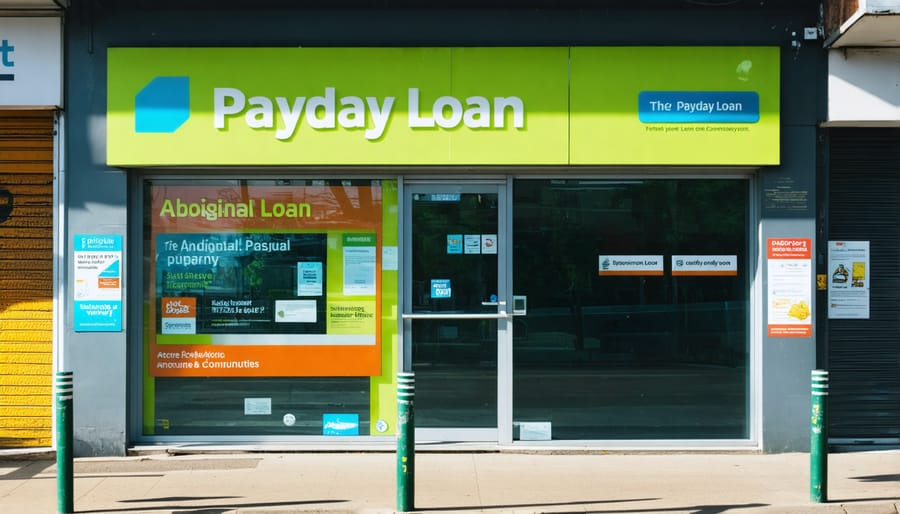
Payday lenders deliberately establish operations in proximity to First Nations communities, employing strategic targeting that community advocates have documented extensively. Research conducted by Indigenous financial counselors reveals these lenders cluster around reserve boundaries where traditional banking services remain scarce or absent—a gap created by decades of systemic exclusion from mainstream financial institutions.
“We see the same pattern repeatedly,” explains Margaret Whiteduck, a Cree financial literacy educator with twenty years of experience. “When banks closed their branches in our communities, payday lenders moved in immediately. They knew exactly what they were doing.”
This targeting exploits historical barriers Aboriginal peoples face in accessing conventional credit. Colonial banking policies historically denied Indigenous peoples equal access to loans and accounts, creating generations unfamiliar with traditional banking relationships. Payday lenders capitalize on this legacy, positioning themselves as the only available option during financial emergencies.
The geographic isolation of many reserves compounds vulnerability. Without nearby bank branches or credit unions, community members facing urgent expenses—whether for vehicle repairs, medical costs, or household emergencies—find few alternatives. Payday lenders design their products to appear accessible: minimal documentation, quick approval, no credit checks required.
However, this apparent accessibility masks a dependency cycle. High interest rates—sometimes exceeding 400% annually—ensure borrowers struggle to repay, necessitating repeated loans. Community health workers observe how this pattern drains household resources, perpetuating financial stress across generations while enriching external corporations at community expense.
Community-Based Financial Alternatives
Aboriginal Financial Institutions and Credit Unions
Aboriginal-owned financial institutions and credit unions represent a crucial alternative to predatory lending, offering services grounded in community values and mutual support. These institutions recognize that financial wellbeing extends beyond transactions—it encompasses cultural preservation, community empowerment, and intergenerational prosperity.
Peace Hills Trust, established by the Samson Cree Nation in 1980, stands as Canada’s only federally chartered First Nations trust company. Operating from a foundation of Indigenous self-determination, Peace Hills offers small loans and lines of credit with terms that consider the unique circumstances facing Aboriginal borrowers. Their approach acknowledges that traditional credit scoring systems often disadvantage Indigenous people due to historical barriers to wealth accumulation and banking access.
Several provincial credit unions serving Aboriginal communities provide $500 cash advances through lines of credit or small loan programs. Caisse Financial Group and various provincial Aboriginal capital corporations offer emergency lending options with interest rates significantly lower than payday lenders—typically ranging from 12-19% annually compared to 400-600% from predatory sources.
What distinguishes these institutions is their incorporation of cultural values into lending practices. Many employ Aboriginal staff who understand community contexts, offer services in Indigenous languages, and structure repayment schedules around seasonal employment patterns common in remote communities. Some institutions integrate traditional concepts of reciprocity and collective responsibility, viewing lending as relationship-building rather than purely transactional.
Indigenous financial cooperatives also provide financial literacy programs that contextualize money management within cultural frameworks, helping members understand credit while maintaining connections to traditional values of sharing and community support. These educational components address systemic financial exclusion while building long-term economic resilience within Aboriginal communities.

Traditional Lending Circles and Community Support Networks
Across Indigenous communities, Elders and knowledge keepers remember a time when mutual aid wasn’t merely practiced—it was fundamental to survival and cultural continuity. Today, several Aboriginal communities are deliberately revitalizing these traditional economic practices, creating community support networks rooted in reciprocity rather than debt.
These modern lending circles, sometimes called “giving circles” or “shared responsibility networks,” operate on principles that predate colonization. Members contribute what they can—whether $20 or $200—into a collective pool. When someone faces an emergency need, they can access funds without interest charges or credit checks. The expectation isn’t contractual repayment but rather communal reciprocity: when you’re able, you give back.
“Our grandparents understood that when one person struggles, we all feel it,” explains a Cree community organizer facilitating such circles in northern Saskatchewan. “This isn’t charity—it’s how we’ve always lived.”
Some communities are formalizing these networks through Indigenous-led organizations, creating structures that honor traditional values while providing documentation members can use to build financial records. Others remain intentionally informal, operating through kinship networks and word-of-mouth.
While these circles cannot instantly provide $500 to everyone who needs it, they represent something potentially more valuable: a pathway toward collective economic resilience that doesn’t extract wealth from already marginalized communities but instead strengthens the social fabric that sustains them.
Government Programs and Emergency Assistance Options
Aboriginal peoples in Canada have access to several government programs and emergency assistance options that may provide more appropriate support than commercial payday loans. Understanding these resources represents an important step toward financial sovereignty and community wellbeing.
At the federal level, Indigenous Services Canada administers various emergency assistance programs through local band offices and tribal councils. Many First Nations, Inuit, and Métis communities maintain band-administered emergency funds specifically designed to support members facing unexpected financial hardships. These funds typically operate on principles of community support rather than profit, often providing interest-free assistance with flexible repayment terms that respect individual circumstances.
Provincial and territorial governments offer indigenous-specific social services that can address immediate financial needs. Emergency social assistance programs may provide one-time payments for urgent situations such as utility disconnections, emergency travel for medical care, or unexpected housing costs. Eligibility and amounts vary by jurisdiction, but these programs generally prioritize community members’ dignity and long-term stability over quick profit extraction.
Community members emphasize the importance of connecting with local friendship centres, which serve as cultural hubs and information resources. As Elder Margaret Whiteduck notes, “Our centres understand the whole person, not just the immediate crisis. They help navigate systems that weren’t built with our communities in mind.”
Many communities also maintain traditional support networks and ceremonial assistance programs rooted in indigenous knowledge systems and practices of reciprocity. These approaches recognize that financial emergencies often reflect broader systemic issues requiring community-based solutions.
Band offices typically employ financial counsellors or social workers who understand both government programs and community-specific resources. Reaching out directly to these local contacts ensures access to the most current information about available emergency funds and application processes, while maintaining cultural connections that support overall community resilience.
Building Financial Literacy and Long-Term Resilience
Culturally-Grounded Financial Education Programs
Several communities across Canada have developed financial education initiatives that honor indigenous knowledge systems while building practical money management skills. These programs recognize that western financial concepts often conflict with traditional values of collective responsibility and reciprocity, creating unique challenges for Aboriginal peoples navigating contemporary economic systems.
The First Nations Financial Literacy Initiative in Manitoba incorporates teachings from Elders who share traditional stories about resource management and community sharing alongside modern budgeting techniques. As Elder Mary Redsky explains, “Our ancestors understood sustainability and planning for seven generations. These same principles apply to managing money today, but we teach them in ways that respect our worldview.”
In British Columbia, the Indigenous Financial Wellness Program uses talking circles rather than classroom lectures, allowing participants to share experiences without shame while learning from peers. The program addresses the specific challenges of living in remote communities with limited banking access and higher costs of living.
These culturally-grounded approaches demonstrate measurably better outcomes than mainstream financial literacy programs. Participants report feeling more confident managing unexpected expenses like the $500 emergencies that often lead community members toward predatory lending. Success stems from acknowledging that financial management isn’t simply about individual discipline—it requires understanding historical economic disruption, addressing systemic barriers, and rebuilding financial practices rooted in indigenous values of balance, responsibility, and community care.
Economic Reconciliation and Path Forward
Breaking the cycle of predatory lending in Aboriginal communities requires addressing the fundamental economic inequities that create vulnerability to such practices. Elder Mary Jane Johnson from the Nisga’a Nation observes, “When our people have meaningful access to traditional lands and resources, when we control our own economic futures, we don’t need to turn to lenders who profit from our desperation.”
Research demonstrates that communities exercising self-determination through land rights and resource management show significantly lower rates of high-interest borrowing. The implementation of treaty rights, recognition of Aboriginal title, and revenue-sharing agreements create stable economic foundations that reduce financial precarity. When communities establish their own financial institutions, culturally-grounded approaches to lending emerge—ones that understand seasonal income patterns, traditional economic activities, and communal support systems.
Economic reconciliation means more than acknowledgment of past wrongs; it requires concrete investments in infrastructure, education, and business development within Aboriginal communities. Supporting Aboriginal entrepreneurship, creating employment opportunities rooted in traditional knowledge, and enabling community-controlled economic development projects build resilience against exploitative financial practices.
The path forward combines immediate harm reduction—including financial literacy programs designed by and for Aboriginal people—with long-term structural change. As communities reclaim economic sovereignty, alternatives to predatory lending naturally emerge through credit unions, community loan funds, and traditional mutual aid networks. True reconciliation recognizes that economic justice is inseparable from self-determination, and that sustainable solutions must be community-led and culturally grounded.
The urgency that drives someone to seek a $500 cash advance is real and valid—bills don’t wait, and families need to eat. Yet as we’ve explored, these seemingly quick solutions carry heavy costs that extend far beyond interest rates. For Aboriginal communities already navigating economic systems shaped by centuries of dispossession, residential schools, and deliberate exclusion from wealth-building opportunities, predatory lending perpetuates cycles of poverty that have deep colonial roots.
Understanding this history isn’t about dwelling on the past—it’s about recognizing how those forces continue to shape present-day financial inequities. When mainstream institutions have repeatedly failed Indigenous peoples, it’s no surprise that alternative lenders fill the gap, even when those alternatives come with exploitative terms.
But knowledge is power, and you have options. Community lending circles, Aboriginal Financial Institutions, and culturally-grounded financial counseling exist precisely because Indigenous leaders recognized the need for solutions that honor community values of reciprocity and collective wellbeing. These alternatives may require patience, but they build rather than erode financial stability.
The path forward demands both individual action and systemic change. While you navigate immediate needs, remember that advocating for policy reforms—from improved banking access on reserves to interest rate caps on predatory lenders—strengthens the entire community. Your financial wellbeing matters not just individually, but as part of collective resilience.
Aboriginal communities have survived attempts at cultural erasure and economic marginalization through extraordinary strength and adaptability. That same resilience, combined with culturally-appropriate resources and structural reform, can break cycles of debt and build economic sovereignty that respects Indigenous values and supports thriving futures for generations to come.